Custom Precision Parts Supplier: Explained Through Advanced CNC Machining
In today's fast-paced manufacturing world, quality and exactness are not just buzzwords; they are the essential bedrock of success. We understand the critical need for components that fit perfectly and perform flawlessly under the most demanding conditions, which is why advanced CNC machining has become the cornerstone of our operations. As a leading custom precision parts supplier, we are here to demystify this powerful technology and explain how our sophisticated methods deliver superior results for your most ambitious projects.
The Precision Edge: How We, as a Custom Precision Parts Supplier, Master Advanced CNC Machining
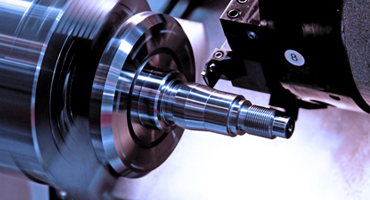
The term "precision" is at the core of what we do, but what does it truly mean in the context of modern manufacturing? It signifies a deep-seated commitment to accuracy, consistency, and quality that is woven into every stage of our process. At our facility, mastering advanced Computer Numerical Control (CNC) machining is not just about having the latest equipment; it's about cultivating a culture of excellence. This approach allows us to transform complex digital designs into tangible, high-performance parts that meet the most stringent specifications. It's this dedication that separates a standard machine shop from a true partner in innovation—a custom precision parts supplier you can trust with your most critical components.
Understanding the Pillars of Precision
Precision in CNC machining rests on a foundation of technology, process control, and expertise. These pillars work in harmony to produce components that are not only accurate to the initial design but are also perfectly repeatable across batches of thousands. This reliability is the hallmark of a world-class manufacturing operation.
Unmatched Accuracy and Consistency
Unmatched accuracy flows from the ability of CNC machines to achieve incredibly tight tolerances, sometimes as fine as ±0.0025mm. Tolerances define the acceptable variation in a part's dimensions, and in high-stakes industries, this margin for error is infinitesimal. We operate in a world of microns, where precision is measured in millionths of a meter (μm). For context, a human hair is about 50-100 microns thick, while our machines work to tolerances that are a fraction of that. This level of exactness is not a one-time achievement; it is delivered with unwavering consistency across thousands of parts.
This repeatability is the true mark of a proficient CNC supplier. It ensures that the first component off the line is functionally identical to the last. Achieving this requires rigorous control over numerous variables, including:
- Machine Calibration and Maintenance: Regular calibration based on standards like ISO 230-1 and preventative maintenance are foundational to keeping machines in optimal condition and preventing dimensional errors.
- High-Quality Materials and Tooling: The process begins with sourcing premium, certified raw materials and using advanced cutting tools appropriate for the material's hardness and stability.
- Process Stability: Maintaining consistent clamping forces (often hydraulic or pneumatic), managing tool wear, and ensuring stable thermal conditions are crucial for preventing variations that can degrade part-to-part consistency.
The Role of Computer Control and Automation
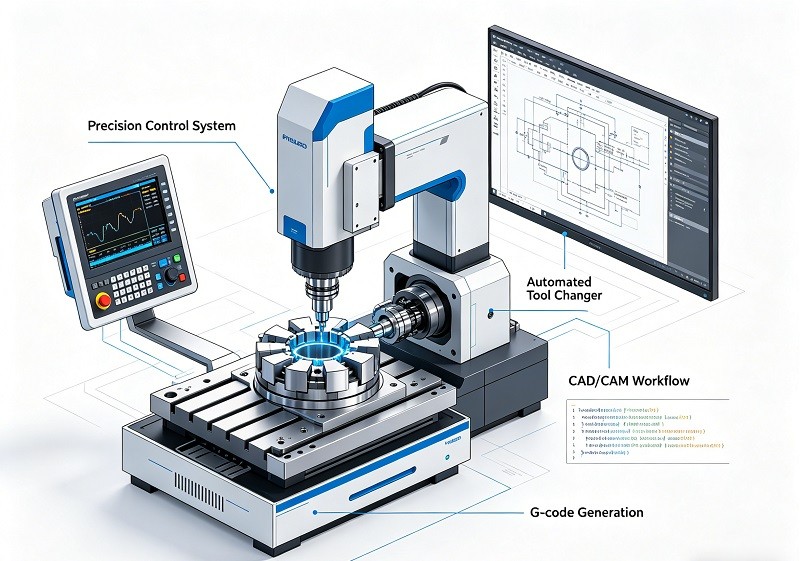
The "computer control" in CNC is what orchestrates this entire symphony of precision. The process begins with a digital blueprint—a Computer-Aided Design (CAD) model. This 3D model is then processed by Computer-Aided Manufacturing (CAM) software, which translates the design into a specific set of instructions called G-code.
G-code is the fundamental programming language that directs the CNC machine's every move. It controls the tool's path, speed, feed rate, and all auxiliary functions with digital certainty. This automated workflow offers several profound advantages:
- Elimination of Human Error: Once the program is verified, the machine executes it flawlessly every time, removing the inconsistencies and potential mistakes inherent in manual operations.
- Complex Geometry Realization: Computer control enables the creation of intricate shapes, complex curves, and multi-faceted surfaces that would be impractical or impossible for a human machinist to produce.
- 24/7 Operation: Automation allows for continuous, "lights-out" production with minimal supervision, drastically increasing efficiency and throughput.
- Seamless Workflow: The integration of CAD and CAM software eliminates traditional barriers between design and manufacturing, streamlining the entire process from concept to physical part. This digital thread ensures that the final product is a perfect physical representation of the initial design.
Ultimately, computer control and automation transform CNC machining from a manual craft into a precise, repeatable, and highly efficient science. This technological foundation is what allows a custom precision parts supplier to deliver uncompromising quality at scale.
Contrasting Our Approach with Other Manufacturing Methods
While CNC machining is a cornerstone of modern manufacturing, it's important to understand how it compares to other common production methods. Its unique advantages in precision, material properties, and flexibility make it the superior choice for a wide range of applications, particularly when quality and performance are non-negotiable. By examining CNC in contrast to methods like casting and additive manufacturing, we can highlight the specific scenarios where its strengths provide an unparalleled edge.
Why CNC Excels Over Casting
Casting, a process where molten metal is poured into a mold, is excellent for producing complex shapes and is often cost-effective for very high-volume production. However, when benchmarked against advanced CNC machining, its limitations in precision, material integrity, and flexibility become apparent.
Superior Precision and Surface Finish: CNC machining is a subtractive process that carves parts from a solid block of material, allowing for exceptionally tight tolerances that casting cannot typically achieve. While methods like die casting can offer good precision, CNC machining can consistently deliver tolerances as tight as ±0.025 mm. This level of accuracy is critical for parts with interfacing surfaces, tight fits, or high-performance requirements. Furthermore, machined parts have a significantly better surface finish, which is often essential for sealing surfaces and reducing friction without secondary polishing or grinding operations.
Enhanced Material Integrity: The casting process, which involves molten metal solidifying in a mold, is susceptible to defects such as porosity, shrinkage, and internal voids. These issues occur as gases become trapped or as the metal cools and contracts unevenly. Such defects can act as stress concentrators, compromising the structural integrity and mechanical properties of the final part. In contrast, parts machined from solid, wrought material have a uniform and dense grain structure, free from such internal flaws. This makes them inherently stronger, more durable, and more reliable for load-bearing and critical applications.
Flexibility and Speed for Low-to-Mid Volumes: Casting requires the creation of expensive and time-consuming tooling (molds or dies). This makes it impractical and costly for prototyping, low-volume runs, or situations where designs may need to change. CNC machining is far more agile; it requires no custom tooling, allowing for rapid production directly from a CAD file. This makes it the ideal choice for producing prototypes, small batches, and parts with evolving designs, offering significantly shorter lead times—often weeks instead of months.
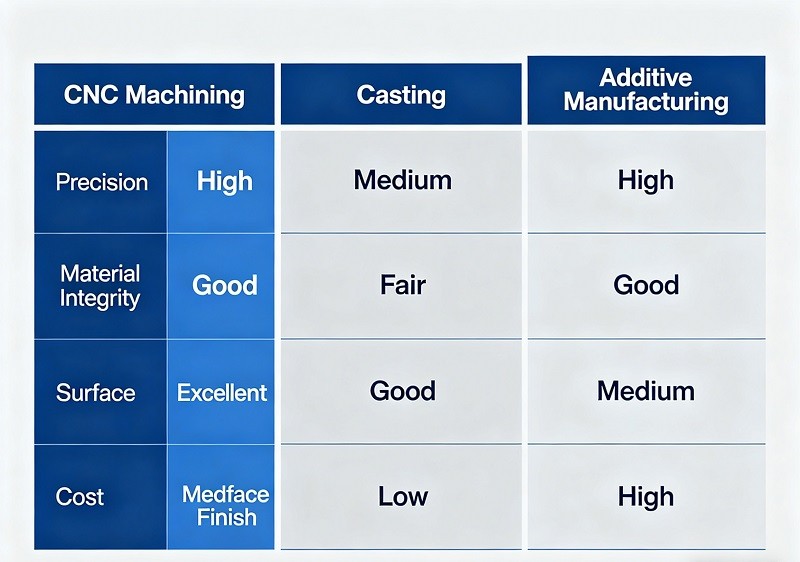
The following table summarizes the key advantages of CNC machining over casting for specific needs:
| Feature | CNC Machining | Casting |
|---|---|---|
| Precision & Tolerance | Superior (can reach ±0.025 mm or better) | Good but limited (typically ±0.1 mm) |
| Material Integrity | High (solid, uniform grain structure) | Variable (risk of porosity, shrinkage) |
| Surface Finish | Excellent (smooth, often no secondary work) | Fair to Good (often requires finishing) |
| Lead Time (Low Volume) | Fast (days to weeks, no tooling) | Slow (weeks to months due to tooling) |
| Cost (Low Volume) | Cost-effective | Prohibitively expensive due to tooling |
| Design Flexibility | High (changes are easy to implement) | Low (changes require new/modified tools) |
| Material Versatility | Extremely wide range of metals and plastics | More limited to castable alloys |
In many cases, a hybrid approach offers the best of both worlds, where a near-net shape is cast and then critical features are CNC machined to achieve the required tolerances and surface finish. However, for applications demanding the highest quality and reliability, starting with a solid billet and using CNC machining exclusively remains the gold standard.
Advantages Over Additive Manufacturing for Specific Needs
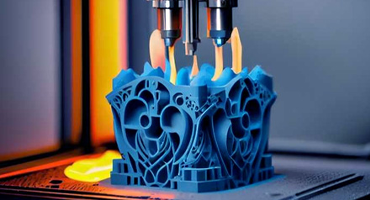
Additive manufacturing, commonly known as 3D printing, has revolutionized rapid prototyping and the creation of highly complex geometries. It builds parts layer by layer from a digital file. While it offers incredible design freedom, for functional, end-use parts that demand strength and precision, CNC machining often holds a distinct advantage.
Superior Material Properties and Strength: CNC machining is a subtractive process that begins with a solid block of material. This means the finished part retains the full, inherent strength and isotropic properties of the original material. Additive processes, such as Selective Laser Melting (SLM) or Direct Metal Laser Sintering (DMLS), create parts by fusing powdered material together layer by layer. While advanced, this method can result in parts with reduced ductility or internal stresses from the heating and cooling cycles. For critical, load-bearing components, the undisrupted grain structure of a CNC machined part provides superior reliability and mechanical performance.
Unmatched Precision and Surface Finish: CNC machining is the gold standard for achieving tight tolerances and exceptional surface finishes. It can produce parts with dimensional accuracy often within ±0.025 mm and create extremely smooth surfaces (as low as 0.8 μm Ra) directly from the machine. Additive processes, while improving, typically offer wider tolerances (e.g., ±0.05 to ±0.2 mm) and produce a rougher, "as-printed" surface finish characterized by visible layer lines. While post-processing can improve the finish of 3D printed parts, CNC machining provides superior quality for components requiring precise fits or smooth, dynamic surfaces.
Efficiency for Production Volumes: For one-off prototypes with complex internal features, 3D printing is often faster and more cost-effective. However, as production volume increases, CNC machining quickly becomes the more efficient and economical choice. Once programmed, a CNC machine can produce parts with much faster cycle times compared to the layer-by-layer build process of a 3D printer. For anything beyond a small handful of parts, the economies of scale favor CNC machining, which consistently delivers high-quality components faster and at a lower per-unit cost.
Here is a summary of scenarios where CNC machining is the preferred method:
| When You Need… | Choose CNC Machining Because… | Choose Additive Manufacturing (3D Printing) When… |
|---|---|---|
| High Structural Strength | Parts retain 100% of the solid material's native strength and are fully isotropic. | Material properties can be weaker and anisotropic due to the layered structure. You need rapid form/fit prototypes. |
| Tight Tolerances | CNC can achieve tolerances as low as ±0.025 mm or better. | Tolerances are typically wider, making it less suitable for precise mating parts. |
| Superior Surface Finish | Produces a very smooth, "as-machined" finish ideal for sealing or aesthetic parts. | Surfaces have visible layer lines and require significant post-processing for a smooth finish. |
| Production-Grade Materials | A vast range of production-grade metals and plastics are available in solid block form. | The selection of materials, especially for metals, is more limited compared to CNC. |
| Efficient Small-to-Mid Batches | Much faster per-part cycle times make it economical for batches of 10 to 1000+ parts. | It is best for one-off parts or very small quantities due to slower build times. |
In essence, while 3D printing is an invaluable tool for innovation and prototyping, CNC machining remains the undisputed leader for manufacturing functional, high-performance parts that require durability, precision, and an impeccable finish.
Delivering for Demanding Industries: What a Custom Precision Parts Supplier Means for Specialized Needs
In today's most advanced sectors, there is no margin for error. Industries like aerospace, medical, and semiconductor manufacturing operate under extreme conditions where component failure is not an option. For these high-stakes fields, a "custom precision parts supplier" is more than just a vendor; it is a critical partner in innovation and safety. Our role extends beyond simply manufacturing parts to specification. It involves a deep understanding of the unique challenges, material requirements, and stringent regulatory standards that govern these industries. We deliver not just components, but confidence, backed by a robust quality system and technological expertise capable of turning the most demanding designs into reality.
High-Stake Sectors Rely on Our Expertise
From the depths of space to the intricacies of the human body, precision components are the invisible engines of progress. As a supplier, we have cultivated specialized knowledge to serve sectors where performance is paramount. This involves mastering exotic materials, adhering to rigorous quality certifications, and developing processes that ensure absolute reliability in every part we produce. Our expertise becomes an extension of our clients' engineering teams, enabling them to push the boundaries of what is possible.
Meeting the Needs of Aerospace, Medical, and Automotive
Different industries present unique sets of challenges, from material constraints to regulatory hurdles. As a dedicated partner, we tailor our processes to meet these specific demands.
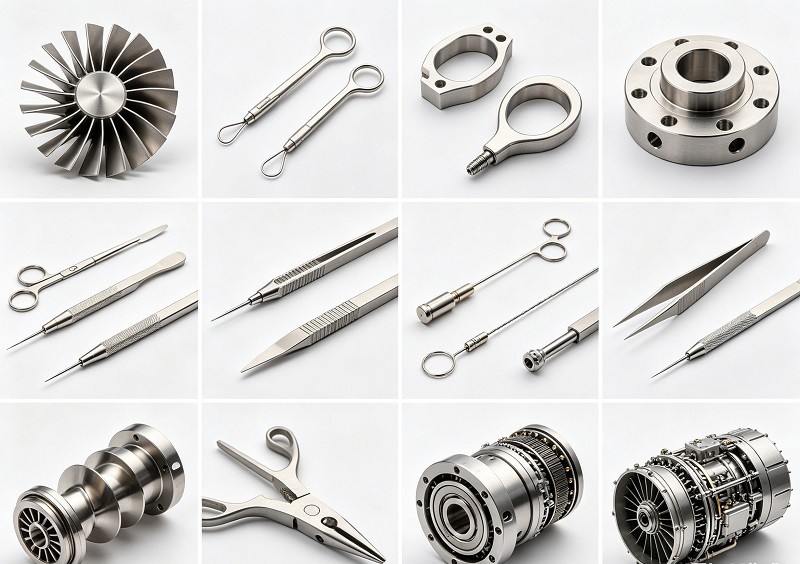
Aerospace: This industry is defined by its need for lightweight components that can withstand extreme temperatures and mechanical stress. We specialize in machining high-performance materials like Titanium alloys (e.g., Ti-6Al-4V), Aluminum alloys (e.g., 7075), and Nickel-based superalloys like Inconel. Adherence to the AS9100 quality management standard is non-negotiable, ensuring full traceability, risk management, and process control for every flight-critical part, from structural brackets to turbine engine components.
Medical: Precision in medical devices directly impacts patient safety. We manufacture components with exceptional accuracy and biocompatibility, using materials such as medical-grade Titanium (Ti-6Al-4V ELI), 316L stainless steel, and PEEK. Our operations are governed by ISO 13485, the standard for medical device quality management systems. This involves rigorous process validation (IQ/OQ/PQ), risk management (ISO 14971), and meticulous documentation to ensure every surgical instrument, implant, and diagnostic component is safe, sterile, and effective.
Automotive: The automotive sector requires high-volume production of durable parts that meet strict cost and performance targets. We are an IATF 16949 compliant supplier, a standard that emphasizes defect prevention and the reduction of variation and waste in the supply chain. We machine a wide range of components for engines, transmissions, and suspension systems, helping automakers improve fuel efficiency, performance, and reliability.
Critical Support for Semiconductor and Waterjet Technologies
Beyond the major sectors, our precision capabilities are vital for enabling other advanced technologies that have their own extreme requirements.
Semiconductor Manufacturing: The semiconductor industry operates in an environment of extreme cleanliness and precision. We machine components for wafer handling equipment, vacuum chambers, and inspection systems from exotic materials that can withstand ultra-high vacuum (UHV) conditions and aggressive plasma etching. Contamination control is paramount, and our processes ensure parts are delivered with exceptional purity and dimensional stability to prevent microscopic defects that could ruin entire batches of microchips.
Waterjet Technologies: Waterjet cutting systems operate under immense pressures, often exceeding 60,000 PSI. The cutting heads, which mix water with an abrasive garnet, require nozzles and orifices made from ultra-hard materials like specialized composites or ceramics. Machining these materials to create precise, wear-resistant orifices is a highly specialized capability. The performance of the entire waterjet system depends on the geometric accuracy and durability of these tiny but critical components, which we are experts at producing.
Tackling Complex Geometries and Demanding Specifications
The true test of a custom precision parts supplier lies in its ability to execute designs that push the limits of manufacturability. Modern product design often involves intricate features, thin-walled structures, and complex curves that are essential for performance but challenging to produce. We thrive on these challenges, leveraging advanced machining technologies and robust process controls to turn even the most ambitious CAD models into functional, flawless components.
Precision for Intricate Designs and Thin-Walled Structures
Many modern components, particularly in the aerospace and medical industries, feature intricate designs for weight reduction or performance optimization. These often include thin walls, deep pockets, and complex, freeform surfaces. Such designs present significant challenges in manufacturing. Thin-walled parts are prone to deformation, vibration (chatter), and thermal distortion during machining due to their lack of rigidity.
Our expertise is built on overcoming these challenges through a combination of advanced technology and strategic process control:
5-Axis CNC Machining: The cornerstone of our capability is 5-axis CNC machining. Unlike traditional 3-axis machines that move along X, Y, and Z axes, 5-axis machines add two rotational axes. This allows the cutting tool to approach the workpiece from virtually any angle. The benefits are transformative:
- Single-Setup Machining: Complex parts with features on multiple faces can be completed in a single setup. This "done-in-one" approach drastically reduces the cumulative errors that can arise from manually re-fixturing a part multiple times, significantly improving accuracy.
- Superior Surface Finish: The ability to continuously tilt the tool maintains an optimal cutting position, which results in a smoother, higher-quality surface finish, especially on contoured surfaces.
- Shorter, More Rigid Tools: By tilting the workpiece or tool head, we can use shorter, more rigid cutting tools. This minimizes tool deflection and vibration, which is a primary cause of inaccuracies and poor finishes when machining deep pockets or thin walls.
Specialized Machining Strategies: Beyond the technology, our machinists employ sophisticated strategies to protect part integrity. This includes:
- Optimized Toolpaths: Using advanced CAM software to generate toolpaths (like trochoidal milling) that minimize cutting forces and ensure a constant tool load.
- Strategic Clamping: Utilizing custom fixtures, soft jaws, or vacuum chucks that secure the workpiece firmly without applying distorting pressure.
- Thermal Management: Employing high-pressure flood coolant or mist systems to dissipate heat effectively at the cutting zone, preventing thermal expansion and warping.
- Symmetric and Layered Cutting: For parts with significant internal stress, we use symmetrical machining patterns, removing material evenly from opposing sides to balance stress release and prevent bowing.
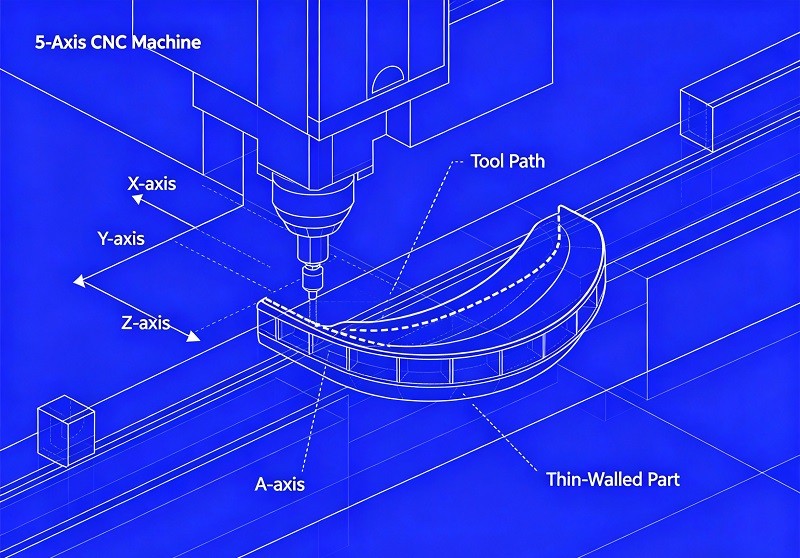
Through these advanced techniques, we transform complex challenges into routine production, delivering intricate and thin-walled parts that are both lightweight and dimensionally perfect.
Ensuring Dimensional Stability for Critical Components
Dimensional stability—a component's ability to retain its original size and shape—is paramount for the function and reliability of any precision assembly. Even microscopic changes caused by temperature fluctuations or internal stresses can lead to part failure or assembly issues. Achieving and maintaining dimensional stability is a multi-stage process that combines material science, strategic machining, and rigorous quality verification.
The Role of Material Choice and Stress Relief: Dimensional instability often originates from residual stress locked within the raw material from processes like rolling or forging. When machining removes material, it unbalances these internal forces, causing the part to warp or distort. To combat this, we implement several key strategies:
- Strategic Material Selection: We help our clients choose materials with known stability. For example, in aluminum, alloys like 7075 offer better dimensional stability than 6061 for certain applications.
- Thermal Stress Relieving: Before final machining, parts can be subjected to a heat treatment process. This involves heating the material to a specific temperature (e.g., 550°C–650°C for steel) and then cooling it slowly. This redistributes and significantly reduces internal stresses, minimizing the risk of warping during subsequent machining operations. Some processes might also involve intermediate stress relief between rough and finish machining for highly critical parts.
The Final Verification: CMM Inspection: Ensuring dimensional stability is not complete until it is verified. We utilize state-of-the-art Coordinate Measuring Machines (CMMs) as a cornerstone of our quality control. A CMM is a high-precision device that uses a probe to take exact measurements of a part's geometry in three-dimensional space.
The roles of CMM inspection are multifaceted and crucial:
- Verification Against CAD: The CMM compares the physical part's dimensions directly against the original CAD model, verifying every feature, hole, and surface with micron-level accuracy.
- Geometric Dimensioning and Tolerancing (GD&T): It goes beyond simple measurements to check complex GD&T callouts for form, orientation, and location, ensuring parts will fit and function correctly within an assembly.
- Process Validation: By inspecting parts at various stages—from first article inspection to final QC—the CMM provides valuable data that validates the stability and repeatability of our entire manufacturing process.
- Objective Proof of Quality: A detailed CMM report provides our clients with objective, traceable proof that their components meet all specified dimensional requirements, delivering both parts and peace of mind.
By integrating intelligent material handling, strategic heat treatment, and meticulous CMM inspection, we ensure our components are not only precise on the day they are made but remain stable and reliable throughout their entire service life.
Beyond Manufacturing: The Comprehensive Solutions from Your Custom Precision Parts Supplier
A true manufacturing partner does more than just cut metal. They provide a seamless, integrated experience that simplifies your supply chain, accelerates your time to market, and guarantees uncompromising quality at every step. As your custom precision parts supplier, we have built our services around this holistic philosophy. From rapid prototyping and flexible production volumes to advanced cleaning, inspection, and cleanroom assembly, we offer a complete suite of solutions designed to handle the most complex project requirements. We are not just a service provider; we are an extension of your team, committed to turning your engineering vision into a production reality with efficiency and excellence.
Specialized Capabilities for Uncompromising Quality
To meet the diverse needs of today’s technology leaders, a supplier must possess a broad range of specialized capabilities. Standard production methods are often insufficient for parts destined for critical environments. Our investment in advanced processes and infrastructure ensures that we can handle projects that demand flexibility, speed, and absolute cleanliness, all under one roof. This integrated approach allows for tighter control, improved quality, and a simplified procurement process for our clients.
High-Mix, Low-Volume Production and Rapid Prototyping
Modern product development is characterized by rapid iteration and increasing customization. This environment demands manufacturing partners who are agile and flexible. We excel in High-Mix, Low-Volume (HMLV) production, a model focused on producing a wide variety of parts in small quantities. Unlike traditional mass production, HMLV prioritizes flexibility and quick changeovers, making it ideal for industries like aerospace, medical, and specialized industrial equipment where parts are often unique and complex. Our expertise in HMLV allows us to:
- Efficiently manage diverse and complex jobs simultaneously.
- Reduce lead times for customized products.
- Minimize inventory costs for our clients by producing parts on a make-to-order basis.
This agility is also central to our Rapid Prototyping services. We leverage CNC machining to produce functional prototypes directly from production-grade materials. The advantages of this approach are significant:
- Speed: With no need for tooling, we can deliver high-precision prototypes in as little as a few days, dramatically accelerating design and testing cycles.
- Accuracy: CNC prototypes are created with the same precision as final production parts, allowing for meaningful and accurate functional testing.
- Material Versatility: Prototypes can be made from a vast range of metals and plastics, ensuring that test results accurately reflect the performance of the final product.
- Seamless Transition to Production: Because the prototyping and production processes are the same, moving from a validated prototype to a full production run is seamless and fast.
Advanced Cleaning, Inspection, and Cleanroom Assembly
For components used in medical, semiconductor, or optical applications, quality goes beyond dimensional accuracy. It extends to absolute cleanliness. Post-machining residues like cutting fluids, microscopic metal chips, and oils can cause product failure or contamination. We provide a vertically integrated solution to address this, ensuring parts are not only precisely made but also delivered ready for their critical application.
Advanced Cleaning: Our multi-stage cleaning processes are designed to achieve the highest levels of purity. A key technology we employ is ultrasonic cleaning. This process uses high-frequency sound waves to create microscopic cavitation bubbles in a specialized cleaning solution. When these bubbles implode, they generate a powerful but gentle scrubbing action that removes contaminants from every surface, including complex internal channels and blind holes that traditional methods cannot reach.
Rigorous Inspection: Every part we produce is subject to a strict quality assurance protocol. This includes visual inspection, and for critical dimensions, verification using our advanced CMM equipment. This ensures that every component shipped meets the exact geometric and dimensional tolerances required by the design.
Cleanroom Assembly: For the most sensitive applications, such as medical device manufacturing, we offer assembly services within a certified cleanroom environment. Our ISO 7 cleanrooms are engineered to control airborne contaminants, temperature, and humidity, preventing particulate contamination during assembly. Our technicians are trained in strict cleanroom protocols and use validated workflows to assemble complex devices, ensuring they remain sterile and free from foreign debris.
By integrating these critical post-processing services, we simplify the supply chain. Our clients receive components that are not just machined, but cleaned, inspected, and assembled to the highest standards, ready for final integration and saving them the time and cost of managing multiple vendors.
Our Commitment to Efficiency and Support
In a competitive global market, efficiency and responsive support are just as important as technical capability. We are committed to being a partner that is not only proficient but also easy to work with. Our investment in smart systems and streamlined service offerings is designed to make the entire process, from quote to delivery, as seamless and transparent as possible. We see ourselves as a vital node in our clients' supply chains, and we continuously optimize our operations to enhance that role and provide unparalleled value.
Optimizing Processes with Smart Systems
In the era of Industry 4.0, efficiency is driven by data. We have embraced the concept of the "digital machine shop," where every aspect of our operation is connected and optimized through intelligent software systems. This digital transformation allows us to provide a superior level of service and transparency to our clients.
At the core of our operations are two key systems:
Enterprise Resource Planning (ERP): Our ERP system is the central nervous system of our business. It integrates every department—from sales and quoting to production planning, inventory, and finance—into a single, unified platform. For our clients, this means:
- Accurate Quoting and Scheduling: Jobs are planned based on real-time machine capacity, material availability, and process requirements, leading to reliable delivery dates.
- Automated Job Tracking: The ERP system provides complete visibility into the status of every job, allowing us to give clients accurate updates at any time.
- Streamlined Financials: All data flows seamlessly, ensuring accurate invoicing and financial reporting.
Manufacturing Execution System (MES): The MES acts as the bridge between our high-level ERP system and the physical shop floor. It monitors, tracks, and controls the entire manufacturing process in real-time. Benefits include:
- Improved Quality Control: The MES enforces procedural steps and tracks quality data, allowing for immediate identification of any deviations from the plan. This proactive approach reduces scrap and rework.
- Increased Uptime: By generating realistic schedules and providing real-time monitoring of machine performance, the MES helps maximize asset utilization and reduce unplanned downtime.
- Paperless Shop Floor: By digitizing work orders and instructions, we eliminate the potential for human error associated with paper-based systems and ensure every operator has the most current information.
By integrating these smart systems, we create a highly efficient, transparent, and data-driven manufacturing environment. This digital backbone allows us to operate with greater agility, reduce costs, and provide a level of support that builds lasting partnerships.
Build-to-Print Services for Seamless Production
For many of our clients, particularly those with established and mature product designs, the primary need is not design collaboration but flawless execution. This is the foundation of our build-to-print service. In this model, you provide the complete technical data package—including detailed CAD models, engineering drawings, a Bill of Materials (BOM), and all material and process specifications—and we take full responsibility for manufacturing the components exactly as designed.
Build-to-print is a partnership built on trust and executional excellence. The benefits of this approach are clear:
- Precision and Consistency: We adhere strictly to your designs, ensuring that every part meets your precise requirements without deviation. Our robust quality management system guarantees this consistency across every production run.
- Leverage Our Expertise and Equipment: You gain access to our advanced CNC machining capabilities and specialized processes without the need for capital investment in your own equipment or infrastructure.
- Focus Your Resources: Outsourcing production allows your engineering teams to focus on their core competency: innovation and new product development, rather than managing manufacturing logistics.
- Simplified Supply Chain: By entrusting production to a single, vertically integrated partner, you reduce the complexity of managing multiple vendors for machining, finishing, and assembly. This streamlines communication and improves accountability.
- Scalability: Our build-to-print services are designed to scale with your needs, from prototype and low-volume qualification runs to full-scale production, all while maintaining the same high standards of quality and traceability.
Our role in a build-to-print relationship is to be the reliable manufacturing engine that transforms your proven designs into high-quality, delivered parts, allowing you to bring your products to market faster and with greater confidence.
Partnering for Progress: How a Custom Precision Parts Supplier Builds Resilient Futures
In an era of rapid technological change and global uncertainty, the choice of a manufacturing partner is a strategic decision that impacts more than just the immediate project. A forward-thinking custom precision parts supplier is a partner in building a more resilient and competitive future. This means actively embracing the digital transformation of manufacturing, from automation to AI, to drive efficiency and innovation. It also means strengthening domestic supply chains to reduce risk and promoting sustainable practices that align with modern corporate responsibility. We are committed to not only meeting today's demands but also anticipating tomorrow's challenges, ensuring our clients are well-positioned for long-term success.
Embracing Automation and Digital Transformation
The future of manufacturing is digital and automated. Staying at the forefront of this technological evolution is not just about staying competitive; it's about delivering a fundamentally better product and service. For us, embracing automation and digital tools is a core part of our strategy to enhance precision, boost efficiency, and provide our clients with a transparent, data-rich manufacturing experience. This commitment ensures that we are continuously improving and pushing the boundaries of what is possible in precision machining.
The Imperative of Automation in Modern Precision Machining
The principles of automation extend far beyond the CNC machine itself. In a modern precision machine shop, automation is an end-to-end philosophy that enhances consistency, increases throughput, and reduces the potential for human error. It represents a shift from manual intervention to a controlled, repeatable, and highly efficient production ecosystem.
Key components of our automated workflow include:
- Robotic Machine Tending: Repetitive and physically demanding tasks like loading raw material into a CNC machine and unloading finished parts are prime candidates for automation. We utilize industrial robots and collaborative robots (cobots) for machine tending. These systems can operate continuously, 24/7, without fatigue. This not only dramatically increases productivity but also improves safety by removing operators from potentially hazardous tasks.
- Lights-Out Manufacturing: By combining automated machine tending with our advanced process monitoring systems, we can run production "lights-out." This proven methodology allows our machines to operate overnight and on weekends with minimal or no human supervision. Lights-out manufacturing maximizes our capacity, reduces lead times, and lowers operational costs—benefits that we pass on to our clients.
- Automated Inspection Cells: To ensure quality at speed, we integrate automated inspection into our production cells. This can involve a robot moving a finished part from the CNC machine to an integrated CMM or a non-contact laser scanner. The system performs a 100% inspection of critical features and feeds the data back to the machine controller, which can then automatically compensate for tool wear. This closed-loop quality control system detects deviations in real-time, preventing defects before they escalate.
Automation is imperative in modern precision machining because it replaces human variability with machine consistency. It is the key to achieving scalable, high-quality production and is fundamental to our commitment to delivering perfect parts, every time.
Leveraging Software, AI, and IoT for Optimal Performance
Software, Artificial Intelligence (AI), and the Internet of Things (IoT) are no longer futuristic concepts; they are practical tools that we leverage daily to enhance performance and deliver superior results. By integrating these digital technologies into our machining processes, we create a smart manufacturing ecosystem that is predictive, adaptive, and highly efficient.
AI-Powered Toolpath Optimization: Programming a CNC machine is a complex task. We utilize advanced CAM software that incorporates AI to optimize cutting toolpaths automatically. By analyzing the part's geometry and material, the AI can generate paths that reduce machining time, minimize tool wear, and improve surface finish. For example, AI can adjust cutting parameters in real time to avoid chatter vibrations, leading to better quality and longer tool life.
IoT and Predictive Maintenance: Our CNC machines are equipped with a network of IoT sensors that continuously monitor critical parameters like vibration, temperature, and power consumption. This real-time data is fed into an analytics platform that uses machine learning algorithms to detect patterns and anomalies. This enables predictive maintenance—forecasting a potential equipment failure before it happens. By addressing maintenance needs proactively, we drastically reduce unplanned downtime, ensuring production schedules remain on track and reliable.
Data Analytics for Continuous Improvement: The massive amount of data generated by our machines and systems provides a rich source for continuous improvement. By analyzing historical and real-time data, we can identify trends, pinpoint inefficiencies, and optimize workflows. This data-driven approach allows us to refine our processes, reduce waste, and consistently enhance the quality and cost-effectiveness of our operations, which directly benefits our clients.
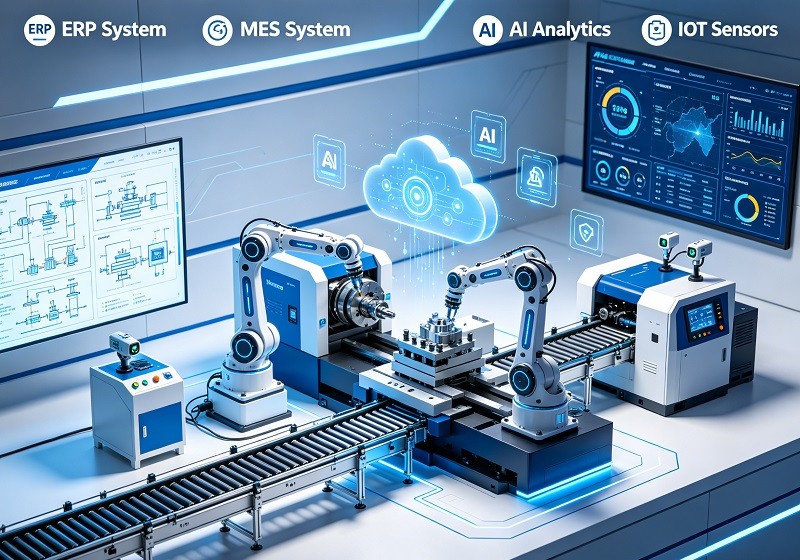
By harnessing the power of these advanced digital tools, we move beyond reactive manufacturing to a proactive, intelligent model that ensures optimal performance, reliability, and value.
Strengthening Supply Chains and Driving Sustainability
The manufacturing landscape is undergoing a profound shift, driven by a dual focus on supply chain resilience and environmental responsibility. As a domestic manufacturing partner, we are intrinsically positioned to address both of these critical priorities. A partnership with us is not just a transaction; it's an investment in a more stable, secure, and sustainable supply chain. We are committed to building a robust manufacturing ecosystem that reduces logistical risks while championing the efficient use of resources, helping our clients achieve their operational and corporate sustainability goals simultaneously.
The Critical Role of Domestic Manufacturing and Resilience
Recent global events have exposed the vulnerabilities of long and complex international supply chains. From shipping delays and port congestion to geopolitical instability, relying on overseas manufacturing introduces significant risks that can halt production and compromise delivery schedules. Reshoring, or bringing manufacturing back to the U.S., has become a critical strategy for building more resilient and reliable operations.
Partnering with a domestic precision parts supplier like us provides several key advantages for strengthening your supply chain:
- Reduced Lead Times and Shipping Costs: A shorter, local supply chain drastically cuts down on transportation time and costs. This ensures faster and more predictable deliveries, allowing you to respond more quickly to market demands.
- Enhanced Agility and Communication: Operating in the same or similar time zones enables real-time collaboration. Problems can be solved quickly, and design changes can be implemented without the frustrating delays of international communication.
- Improved Quality Control: Proximity allows for easier oversight and collaboration. It's simpler to visit a domestic facility to conduct audits, resolve issues, and ensure strict quality standards are being met.
- Stronger Intellectual Property (IP) Protection: Manufacturing domestically provides the robust legal protection of U.S. intellectual property laws. This significantly reduces the risk of IP theft, a major concern when sending sensitive design files to overseas partners.
- Economic and Community Benefits: Choosing domestic manufacturing is an investment in the national economy. It supports skilled jobs, strengthens local communities, and contributes to a more self-sufficient and stable industrial base.
By bringing production closer to home, we help our clients mitigate supply chain risks, enhance operational control, and build a more secure foundation for their business.
Commitment to Material Efficiency and Reduced Waste
Sustainability in manufacturing is no longer an optional add-on; it is a core component of responsible business practice. As a subtractive process, CNC machining inherently generates waste in the form of metal chips, or swarf. However, a forward-thinking supplier is deeply committed to minimizing this waste and maximizing material efficiency at every stage. Our commitment to sustainability is demonstrated through several key practices:
Toolpath Optimization for Material Efficiency: Before any material is cut, we use sophisticated CAM software to optimize toolpaths. This ensures that we remove only the material that is absolutely necessary, following the most efficient route possible. By doing so, we reduce machining time, minimize energy consumption, and, most importantly, decrease the amount of material that becomes scrap.
Comprehensive Material Recycling Program: We view the metal chips generated during machining not as waste, but as a valuable resource. We have a robust system for collecting, segregating, and recycling all of our metal scrap. Aluminum, steel, titanium, and other alloys are carefully separated and sent to certified recycling partners to be melted down and reintroduced into the supply chain as new raw material. This practice follows the principles of a circular economy, conserving natural resources and significantly reducing the energy required compared to processing virgin ore.
Coolant Recovery and Management: Cutting fluids are essential for many machining operations but can be an environmental concern if not managed properly. We use advanced filtration and recovery systems to clean and reuse our coolants, extending their life and minimizing the volume of hazardous waste that needs to be disposed of. When possible, we also employ dry or near-dry machining techniques to eliminate the need for coolants altogether.
Through these concerted efforts, we strive to be responsible stewards of the environment. Our commitment to material efficiency and waste reduction not only helps protect the planet but also creates cost savings that contribute to the overall value we provide to our clients.
Conclusion
Choosing the right custom precision parts supplier is a decision of strategic importance, one that directly impacts the success of your projects and the ultimate quality of your end product. It's about finding a partner who can translate complex designs into flawless components with unwavering consistency.
Through our mastery of advanced CNC machining, a comprehensive suite of value-added services, and an unyielding commitment to innovation, we stand ready to be that trusted partner for your most demanding applications. We empower your success by consistently delivering top-tier components that meet the exact specifications of today's most challenging industries.
Our dedication to precision, supported by sophisticated automation, robust quality systems, and a forward-looking approach to supply chain resilience and sustainability, ensures both exceptional parts and genuine peace of mind. We invite you to share this insight with your colleagues and start a conversation about how a true precision partnership can elevate your next project.