Custom Non-Standard Parts Manufacturing: What It Is and When You Need It
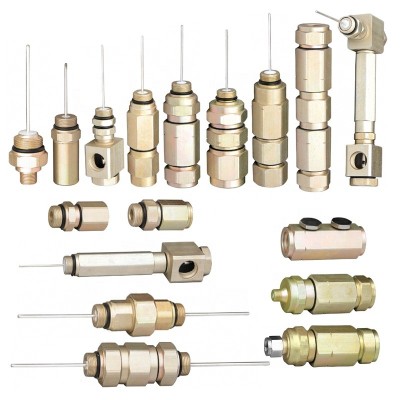
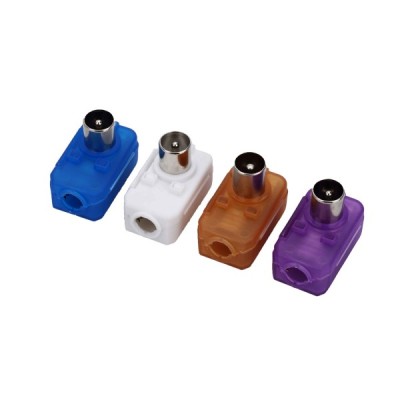
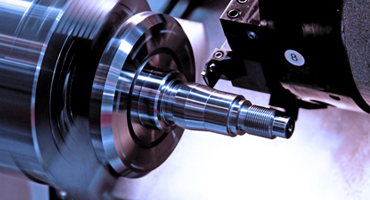
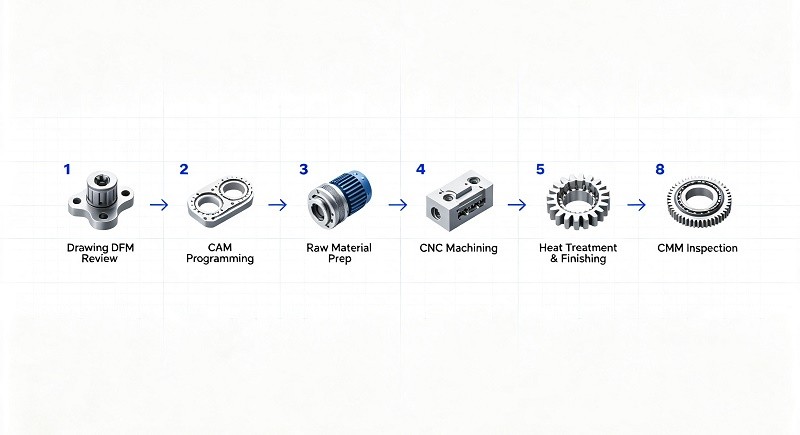
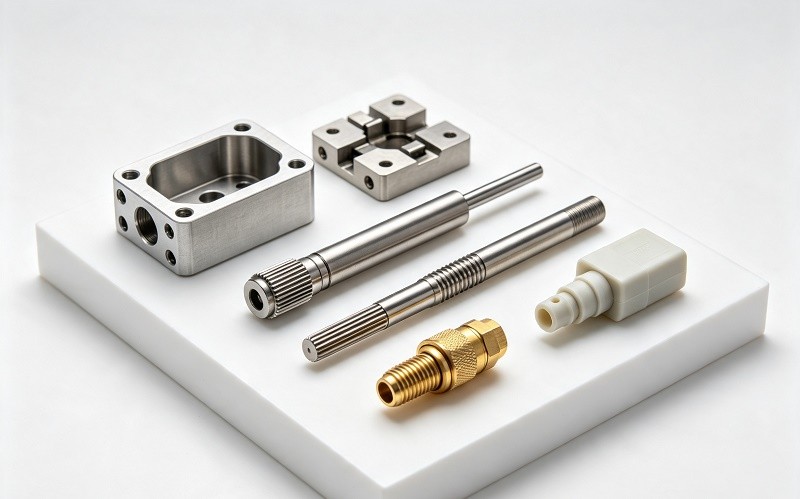
Walk through any advanced machine shop floor or open the BOM of a high-performance product, and you will find a mix of two very different kinds of components: off-the-shelf standard parts and one-off, drawing-controlled custom non-standard parts. In 2026, industry surveys show that custom and non-standard orders already account for more than 45% of all precision machining demand, as product lifecycles compress and engineers push designs beyond catalog limits. This guide explains what custom non-standard parts manufacturing really is, how it differs from standard parts, when it is worth the extra cost and lead time, and how to work with a CNC machining partner such as SOMI Custom Parts to get reliable results. Custom non-standard parts manufacturing is the production of components that do not conform to published industry standards such as ISO, ANSI, DIN, GB, or JIS. Instead of being selected from a catalog, these parts are designed and machined from a customer drawing, 3D model, or even a physical sample, to meet one specific application. Common examples include irregular brackets with non-standard hole patterns, special-purpose shafts with custom keyways and splines, unique housings that integrate mounting features and sealing faces, custom fixtures and jigs, and connectors or adapters built to proprietary interfaces. The defining characteristics of a non-standard part are its uniqueness and its drawing-controlled acceptance: the part is verified against an approved model, drawing revision, material specification, and inspection plan, rather than against a catalog designation. This does not automatically mean tighter tolerances or better performance — it means the geometry, material, and function are decided by your engineering intent, not by what a distributor happens to stock. Standard part = catalog-controlled, mass-produced, interchangeable. Custom non-standard part = drawing-controlled, built to a specific application, unique geometry. A hybrid design (standard bearings and seals inside a custom housing) often delivers the best of both worlds. Choosing a custom non-standard part is not about avoiding a catalog — it is about protecting function, fit, and performance where a standard part cannot deliver them. Buyers gain five practical advantages. Non-standard dimensions, datums, and mounting patterns eliminate interference, misalignment, and installation problems on the first try. One custom part can combine mounting, fluid routing, alignment, heat transfer, and sealing, reducing assembly count and inventory. Choose the exact grade and condition — hardened steel, aluminum, titanium, brass, or engineering plastic — for strength, weight, or corrosion resistance. Assign tight tolerances only to functional relationships, protecting critical bores, surfaces, and threads without overpaying. Custom shafts, housings, and gears can deliver documented gains such as 30% weight reduction, longer service life, or higher operating speed. Unique geometry is harder to reverse-engineer, protecting your competitive advantage and product identity. The decision is not about "better" but about which control model fits the application. The table below compares the key dimensions engineers and buyers should evaluate before requesting a quote. Remember that unit price alone can be misleading. A custom part that consolidates several standard components can lower total system cost by cutting assembly operations, reducing inventory, and simplifying quality control — even when the single piece costs more. Custom non-standard parts are justified when a standard solution creates a documented compromise. Here are the five situations where the premium is clearly worth paying. Limited installation space, a unique port pattern, or a non-standard interface means a catalog part simply cannot mount. Forcing a misfit standard part usually costs more later in rework than designing it correctly. Sealing faces, controlled load paths, heat dissipation, electromagnetic shielding, or corrosion resistance at high temperature cannot be met by generic hardware. When a custom design delivers measurable gains — for example weight reduction, longer fatigue life, or higher speed — the engineering case pays for itself. Aerospace, medical, and nuclear applications demand full documentation from material certification through each manufacturing and inspection step. A custom part lets you validate real geometry, real material, and real interfaces in prototyping, then carry the same definition into stable batch production. Conversely, keep standard parts when general-purpose dimensions are acceptable and sourcing speed, low cost, and easy replacement matter more — for example fasteners, bearings, seals, and common hardware. When only one interface is unique, use a hybrid design: standard wear items on the inside, custom housing or manifold on the outside. A reliable non-standard parts supplier follows a disciplined process that turns your drawing into a qualified component. Understanding each stage helps you avoid the common causes of delay: incomplete drawings, ambiguous tolerances, and unclear material states. The technical team checks dimensions, datums, material, heat treatment, and surface finish; identifies thin walls, deep holes, and sharp corners; and recommends design-for-manufacturing changes such as transition radii or relaxed tolerance classes to cut cost. The route is planned — blank preparation, roughing, semi-finishing, heat treatment, finishing, surface treatment, inspection — and machines are assigned: gantry centers for large parts, CNC lathes for rotary parts, machining centers for complex cavities. CAM toolpaths are simulated to detect collisions and overcutting before metal is cut. Raw material is sourced to the specified grade and condition, blanks are cut, and reference faces are roughed to establish a stable datum for finishing. Multi-axis milling, turning, drilling, tapping, and wire EDM shape the part. 5-axis machines handle complex 3D contours and undercuts in a single setup, reducing alignment errors by up to 95%; 3+2 axis machining can cut cycle time by around 40% versus 3-axis on semi-complex parts. Quenching, tempering, nitriding, or aging changes mechanical properties; anodizing, plating, blackening, painting, or passivation protects the surface. Final-state inspection is essential because these processes can alter controlled dimensions. CMM probes verify hundreds or thousands of data points against the 3D model, functional tests validate performance, and first-article reports, material certificates, and inspection records are issued for traceability. Three technical areas have the largest impact on whether your non-standard part is delivered on time, on budget, and in specification. Carbon steel (45#, 4140) offers tensile strength of roughly 600-1,200 MPa for high-load brackets and gearboxes; aluminum gives light weight and good machinability; stainless steel resists corrosion; brass and copper suit electrical and fitting applications; engineering plastics suit low-friction, low-weight designs. Standard CNC capability holds ±0.01-0.05 mm, and high-precision work can reach ±0.005 mm with surface roughness down to Ra 0.4-0.8 μm. Apply tight tolerances only to functional relationships — tolerance every dimension and cost multiplies. Irregular shapes need dedicated fixtures, magnetic clamping, or 3D-printed soft jaws. Custom fixture locating accuracy of ±0.002 mm and magnetic clamping that reduces distortion by up to 70% versus traditional vises keep odd geometries stable under cutting forces. If you are at the drawing stage, our earlier guides on design for manufacturability and CNC tolerances explain how to set these parameters before you send the file out for quotation. SOMI Custom Parts is a precision parts manufacturer focused on drawing-controlled custom components, from one-off prototypes to medium-batch production. We machine aluminum, stainless steel, carbon steel, copper alloys, and engineering plastics on 3-axis to 5-axis CNC equipment, with routine tolerances of ±0.01 mm and dedicated quality control including CMM inspection, first-article reports, and material certificates. Our engineering team reviews every drawing before production, flags manufacturability risks, and suggests cost-saving design changes — the same DFM discipline that consistently reduces machining time and scrap on non-standard geometries. Whether you need an irregular bracket for an automation line, a special-purpose shaft, a custom fixture, or a housing that integrates sealing and mounting features, we work from your 3D model, 2D drawing, or even a physical sample. Browse our CNC machining parts capabilities or the full product catalog, learn more about our facility and quality system, and send us your inquiry with drawings for a fast technical review and quotation. Standard parts are mass-produced to published industry standards (ISO, ANSI, DIN, GB, JIS) and are interchangeable across suppliers. Non-standard parts are manufactured to a specific drawing or model for one application — the geometry, material, and tolerances are defined by your engineering requirements rather than a catalog. Unit cost is typically 30-100% higher because of engineering, setup, tooling, and small-batch production. However, a well-designed custom part that consolidates multiple functions can reduce total system cost by eliminating adapters, assembly steps, and inventory — always compare total cost of ownership, not just unit price. Simple machined parts can ship in days; complex components with heat treatment, special coatings, or multi-operation machining typically take a few weeks. Send a complete drawing with material, tolerance, and finish specified to get an accurate lead time and avoid revision cycles. Yes. We accept STEP, IGS, DWG, PDF, and STL files, and for parts without CAD data we can reverse-engineer from a physical sample using 3D scanning, typically holding ±0.02 mm replication accuracy against the original. Depending on your requirements, we provide first-article inspection reports, CMM dimensional reports, material certificates, and process documentation. For regulated industries, documentation is aligned with ISO 9001 quality management requirements so you can trace every batch. Custom non-standard parts manufacturing exists for one reason: to deliver exact fit, function, and performance where catalog parts force a compromise. In 2026, with over 45% of precision machining demand already coming from non-standard and custom orders, drawing-controlled manufacturing is a mainstream capability rather than an exception. Use standard parts where they genuinely fit, choose custom parts where function, traceability, or integration justifies the investment, and work with a partner who reviews your drawing before quoting — that review is where most cost and quality problems are prevented. Ready to discuss your non-standard component? Contact SOMI Custom Parts or send your drawings for a technical review and quotation today.Introduction: Why Custom Non-Standard Parts Are Everywhere in Modern Manufacturing
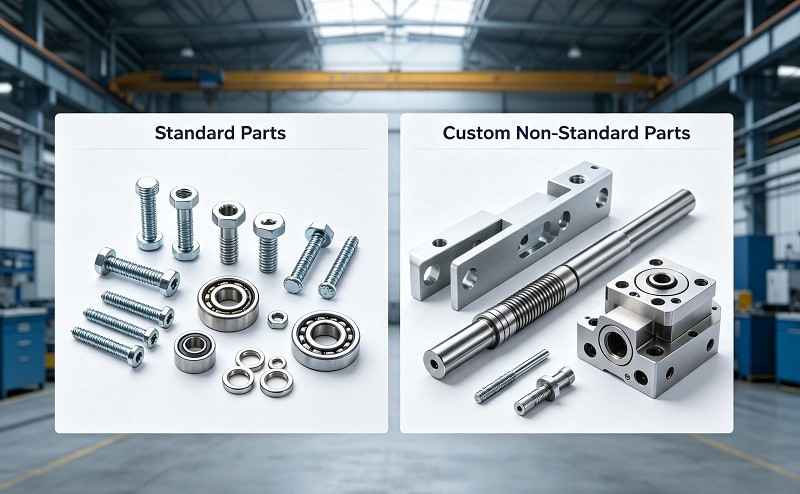
What Is Custom Non-Standard Parts Manufacturing?
Key Benefits of Custom Non-Standard Parts Manufacturing
Exact fit to assembly
Functional integration
Material freedom
Controlled tolerances
Performance optimization
Proprietary design protection
Standard Parts vs. Custom Non-Standard Parts: A Practical Comparison
Factor
Standard parts
Custom non-standard parts
Design basis
Catalog designation and industry standard (ISO, ANSI, DIN, JIS)
Approved drawing, model, and revision for one application
Production method
Mass production in large batches
Single-piece or small-batch CNC machining
Unit cost
Low, economies of scale (a standard bolt costs pennies)
Typically 30-100% higher; a custom bolt may cost dollars to hundreds per unit
Lead time
Immediate, off the shelf
Days for simple machined parts, weeks for complex or heat-treated components
Interchangeability
High, multiple suppliers
Low, application-specific
Fit to function
Good for general-purpose use
Exact for the target assembly, load path, and environment
When Do You Actually Need Custom Non-Standard Parts?
No standard part fits the envelope
Special function or environment
Performance targets are provable
Regulatory traceability
Prototype to production continuity
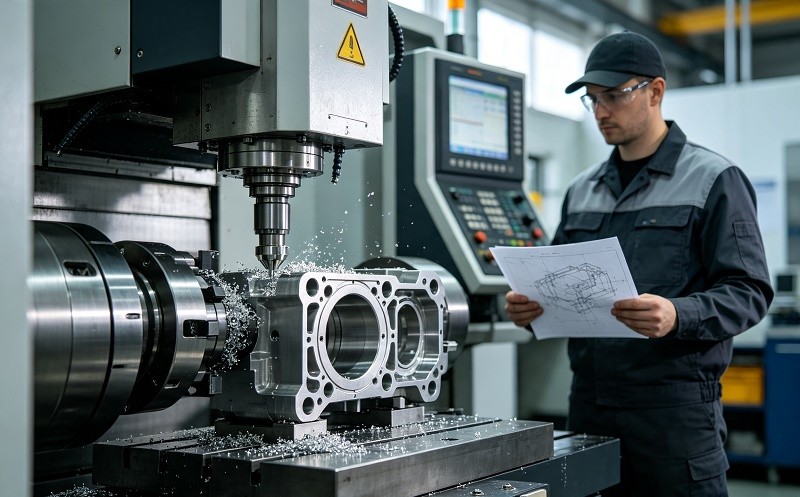
The Custom Non-Standard Parts Manufacturing Process, Step by Step
Drawing review and DFM feedback
Process planning and CAM programming
Material preparation
CNC machining
Heat treatment and surface finishing
Inspection and documentation
Key Manufacturing Considerations for Non-Standard Parts
Material selection
Tolerance strategy
Fixturing and workholding
How SOMI Custom Parts Can Help
Frequently Asked Questions
What is the difference between standard and non-standard parts?
How much more do custom non-standard parts cost than standard parts?
How long does it take to manufacture a custom non-standard part?
Can I provide only a 3D model, or even a sample instead of a 2D drawing?
What quality documentation comes with custom non-standard parts?
Conclusion