Custom CNC Machining for Robotics and Automation Equipment
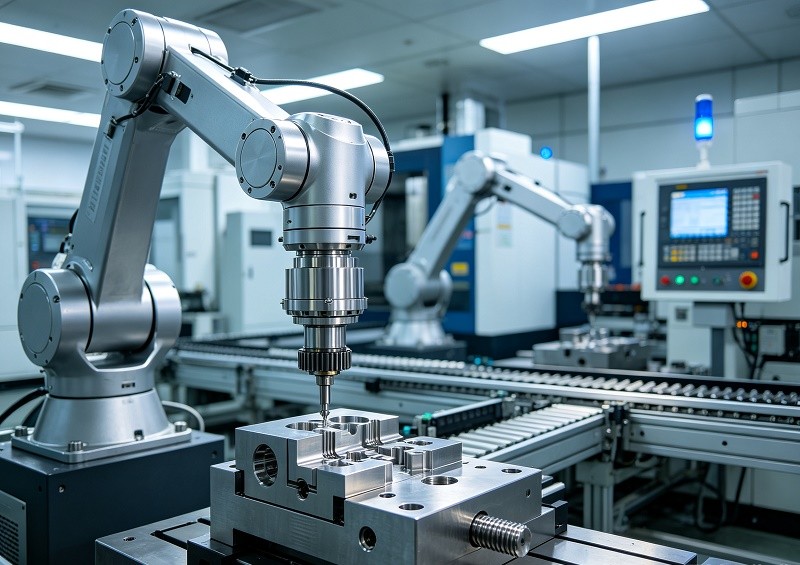
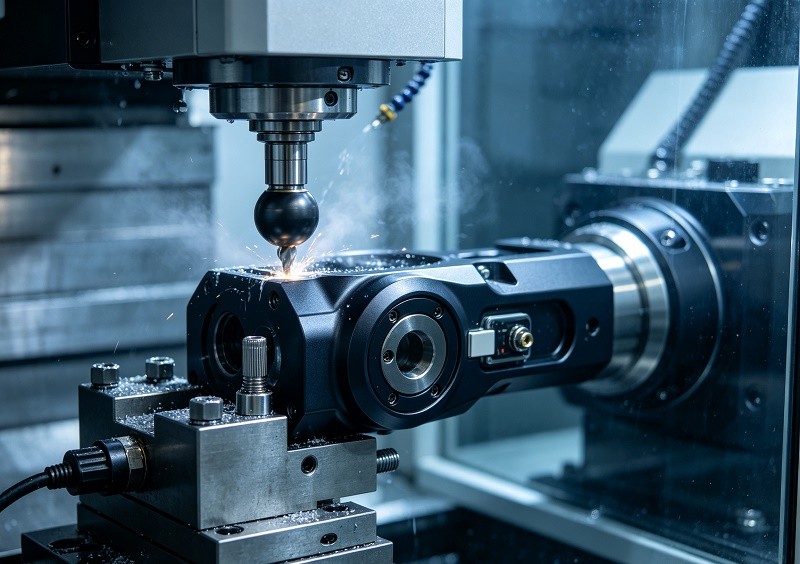
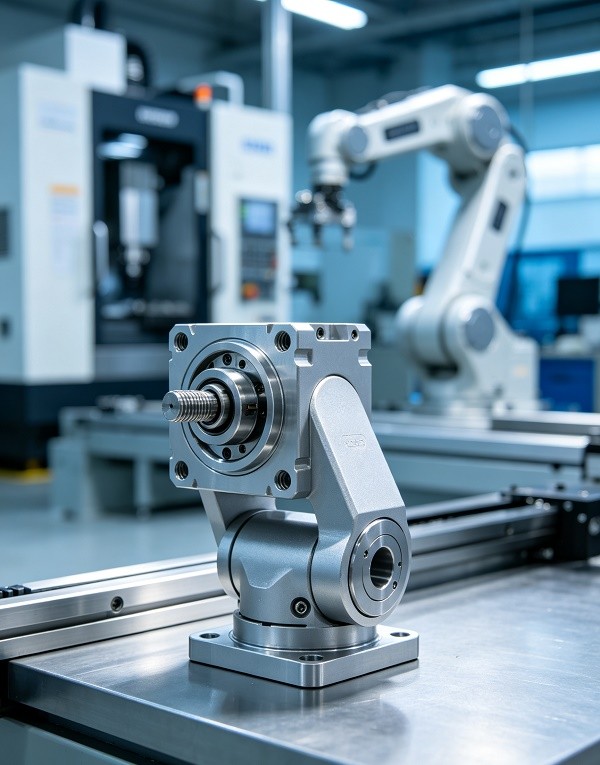
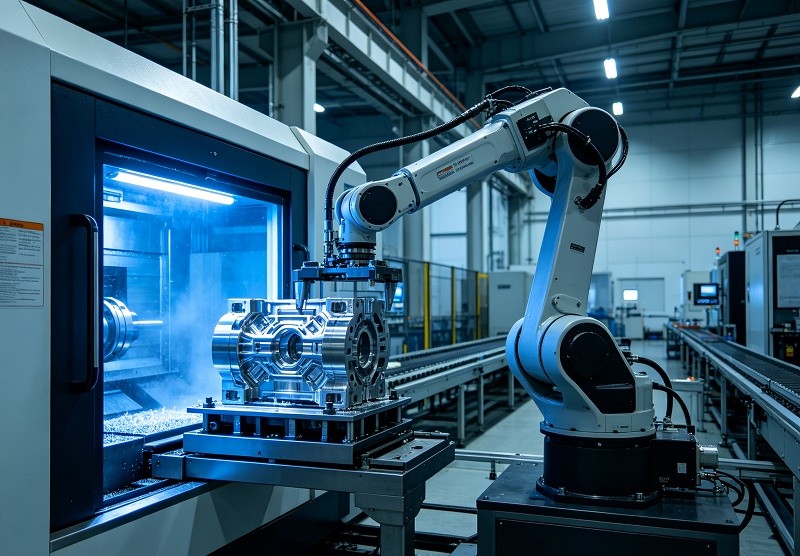
Industrial robotics and factory automation are transforming global manufacturing at an unprecedented pace. According to market research, the global CNC robot market was valued at USD 4.73 billion in 2026 and is projected to reach USD 8.52 billion by 2032, growing at a CAGR of 10.45%. Behind every robotic arm, automated assembly line, and collaborative robot lies a foundation of precision-machined components — joint housings, gearbox parts, end effectors, and structural frames — that must meet exacting standards of accuracy, repeatability, and durability. This guide explores how custom CNC machining empowers the robotics and automation industry with the reliable, high-performance parts it demands. Custom CNC machining for robotics refers to the computer-controlled manufacturing of bespoke mechanical components used in industrial robots, collaborative robots (cobots), automated guided vehicles (AGVs), and factory automation systems. Unlike standard off-the-shelf parts, custom CNC machined components are engineered to exact design specifications, enabling robotic systems to achieve optimal performance, minimal backlash, and extended service life. CNC machining remains one of the few manufacturing processes capable of consistently holding tolerances as tight as ±0.005 mm (±0.0002 in) across complex geometries — a requirement that is non-negotiable in robotics, where even a 0.01 mm deviation can cause joint jitter, positioning errors, or premature component failure. Multi-axis CNC machining (3-axis, 4-axis, and 5-axis) allows manufacturers to produce intricate features such as internal cooling channels, lightweight lattice structures, and multi-surface mounting interfaces in a single setup, eliminating cumulative errors from re-fixturing. Robotic joint assemblies demand repeatable positioning accuracy. CNC machining delivers tolerances from ±0.005 mm to ±0.05 mm depending on component function, ensuring smooth motion and long-term stability. Modern robotic components feature lightweight structural pockets, cable routing channels, and precision bearing seats. Multi-axis CNC machining produces these complex features in one clamping operation. Weight reduction is critical in robotics. CNC machining enables hollow structures and lattice designs that reduce component weight by 20–40% while maintaining structural rigidity through optimized material removal. Once a CNC program is validated, every subsequent part matches the first. This repeatability is essential for mass production of standardized robot components with zero dimensional drift. From aluminum 6061 and 7075 for lightweight structural parts to stainless steel, titanium, and engineering plastics (PEEK, POM), CNC machining handles the full spectrum of materials used in robotics. Rapid prototyping through CNC machining allows robotics companies to iterate designs quickly — moving from CAD to functional prototype in days rather than weeks, accelerating development cycles. Robotic systems contain dozens of precision-machined components. The table below summarizes the most common CNC machined parts found in robotic arms and their primary functions: Material selection directly affects robotic performance, weight, cost, and service life. Based on industry data and practical manufacturing experience, the following materials are most commonly specified for robotic components: The workhorse of robotics — lightweight, excellent machinability, good corrosion resistance. Ideal for structural frames, mounting brackets, and housings where weight savings matter. Significantly higher strength than 6061, used for high-load robotic arms and precision dynamic components. Common in aerospace robotics and heavy-duty industrial arms. Corrosion-resistant and high-strength, used in wash-down environments, medical robotics, and food-grade automation. Grades 304 and 316 offer excellent durability. Exceptional strength-to-weight ratio and fatigue performance. Used in aerospace robotics, high-performance automation, and applications requiring extreme durability. High-temperature resistance, low friction, and electrical insulation. Ideal for semiconductor automation components, sensor housings, and lightweight auxiliary parts. Wear-resistant, low-friction engineering plastic. Commonly used for sliding components, guide rails, and anti-collision parts in collaborative robot applications. Optimized material selection can reduce total project cost by 15–30% without compromising performance. Many buyers over-spec materials — working with an experienced CNC machining partner helps identify the most cost-effective material for each component function. Different robotic components require different machining strategies. The choice of process directly impacts cost, lead time, and part quality: The primary process for complex robotic parts — joint housings, arm links, and structural frames. One-time clamping and multi-surface simultaneous processing eliminate positioning errors and enable lightweight lattice structures that reduce weight by 30–50% while improving stiffness by over 60%. Used for rotary components such as joint shafts, bearing sleeves, and gear shafts. Achieves ultra-high roundness and concentricity, ensuring smooth rotation and reducing transmission friction in high-speed robotic joints. Polishing, anodizing, and sandblasting reduce surface roughness to Ra 0.2–0.8 μm. This improves wear resistance, corrosion resistance, and can extend harmonic drive and bearing system life by over 300%. Full manual and mechanical deburring ensures no sharp edges that could cause assembly interference. CMM (Coordinate Measuring Machine) inspection verifies critical dimensions, with SPC (Statistical Process Control) applied on CTQs with Cpk ≥ 1.67 for mass production. Reliability in robotics machining is non-negotiable. Leading CNC machining partners follow rigorous quality frameworks to ensure every component meets functional requirements: Quality management system certification ensuring consistent process control, documentation, and continuous improvement across all production stages. Aerospace-grade quality standard that many robotics OEMs require for critical safety-related components, especially in aerospace and defense robotics applications. Coordinate Measuring Machines verify critical dimensions to ±0.002 mm accuracy. First Article Inspection (FAI) reports, material certificates, and full traceability are standard deliverables. Full material certification and lot-level traceability ensure that every batch of robotic components meets design specifications, with documented inspection reports for quality assurance. Manufacturing robotic components presents several unique challenges that require specialized expertise to overcome: Traditional solid structures are too heavy for modern robotics, while simple hollow designs lack rigidity. Solution: 5-axis machining enables internal lattice and reinforcing rib structures that reduce weight by 30–50% while improving structural stiffness by over 60%. Multi-curved and multi-hole robotic parts accumulate errors across multiple set-ups. Solution: Single-clamp forming on 5-axis CNC equipment eliminates re-positioning errors and improves overall accuracy. Manual operation differences can cause quality drift in mass production. Solution: Standardized toolpath programming, custom fixtures, and 100% dimensional inspection ensure zero variation between production batches. Continuous 4-hour machining runs can cause spindle thermal growth of approximately 0.007 mm. Solution: Thermal compensation strategies, scheduled cool-down pauses, and re-calibration protocols maintain tolerance integrity throughout extended production runs. At SOMI Custom Parts, we specialize in precision CNC machining for the robotics and automation industry. Our capabilities are built to meet the exacting demands of this rapidly growing sector: Whether you are developing a new collaborative robot or scaling production of an established automation platform, we deliver the precision components your systems depend on. Send us your drawings for a fast quotation and engineering review, or browse our CNC machining capabilities to learn more. CNC machining for robotics typically achieves tolerances of ±0.01 mm to ±0.05 mm for standard features, with critical mating surfaces (bearing seats, gearbox housings) reaching ±0.005 mm. Tolerances are verified using CMM inspection to ensure compliance with design specifications. Aluminum 6061-T6 and 7075-T6 are the most popular choices for structural components due to their excellent strength-to-weight ratio. Stainless steel (304/316) is used for corrosion resistance, titanium for high-performance applications, and PEEK/POM for lightweight, low-friction components. Material selection depends on load requirements, operating environment, and budget. 5-axis CNC machining allows complex robotic components to be manufactured in a single clamping operation, eliminating cumulative errors from multiple set-ups. This is critical for maintaining tight tolerances across multi-surface features like joint housings, arm links, and end effector mounting interfaces. Yes. CNC machining enables the creation of hollow structures, internal lattice patterns, and optimized rib designs that reduce component weight by 20–40% while maintaining structural rigidity. This is achieved through advanced CAM programming and 5-axis machining strategies. Look for partners with 5-axis machining capability, experience in the robotics industry, CMM inspection equipment, DFM engineering support, and relevant certifications (ISO 9001). Also evaluate their material range, lead time reliability, and ability to scale from prototype to production. Contact us to discuss your project requirements. Custom CNC machining is the backbone of modern robotics and automation manufacturing. From tiny sensor mounts to massive robot base structures, precision-machined components determine the accuracy, reliability, and longevity of every robotic system. As the global CNC robot market continues its rapid growth — projected to reach USD 8.52 billion by 2032 — the demand for high-quality, precision-machined robotic components will only intensify. Partnering with an experienced CNC machining provider like SOMI Custom Parts ensures that your robotic components are manufactured to the highest standards of precision, quality, and consistency. Our engineering team works closely with clients to optimize designs for manufacturability, select the right materials, and deliver parts that perform reliably in the field. Ready to start your next robotics project? Request a quote today or learn more about our capabilities. For more insights on precision CNC machining, explore our technical blog and product catalog.Precision CNC Machining for Robotics and Automation Equipment
What Is Custom CNC Machining for Robotics?
Key Benefits of CNC Machining for Robotics and Automation
Micro-Level Precision
Complex Geometries
Lightweight, High-Strength Design
Repeatability in Production
Material Versatility
Faster Time to Market
Common CNC Machined Parts in Robotic Arms
Component
Primary Function
Typical Tolerance
Common Materials
Joint Housings Support rotational movement and bearing alignment ±0.01 mm Aluminum 6061, 7075 Servo Motor Mounts Secure servo motors with precise alignment ±0.02 mm Aluminum 6061, Stainless Steel End Effectors Interact with workpieces (grippers, welding heads) ±0.02 mm Aluminum, Steel, Plastics Gearbox Components Transfer motion and torque ±0.01 mm Alloy Steel, Aluminum Bearing Seats Ensure rotational accuracy ±0.01 mm Steel, Aluminum Linear Motion Components Guide precise movement ±0.02 mm Steel, Aluminum Sensor Brackets Mount sensors and cameras ±0.05 mm Aluminum, Plastics Base Structures Support the entire robot assembly ±0.05 mm Aluminum, Steel 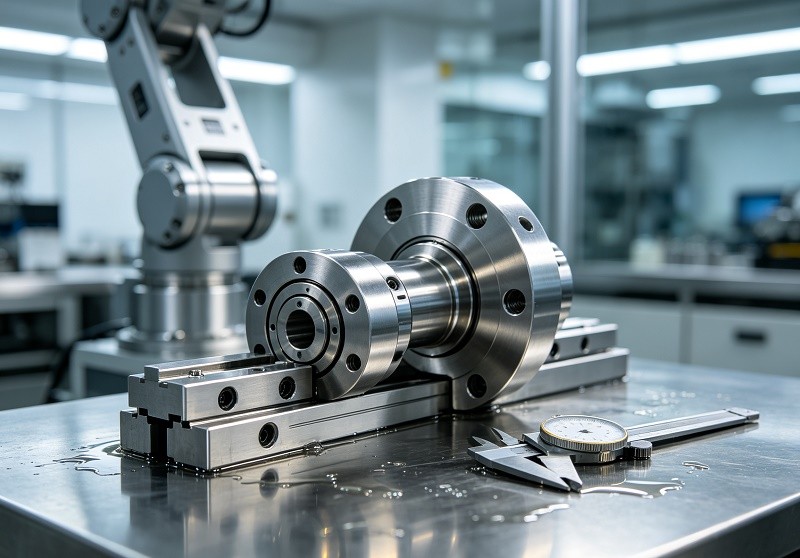
Material Selection for Robotics CNC Machining
Aluminum 6061-T6
Aluminum 7075-T6
Stainless Steel (304/316)
Titanium
PEEK
POM (Delrin)
CNC Machining Processes for Robotics Components
5-Axis CNC Milling
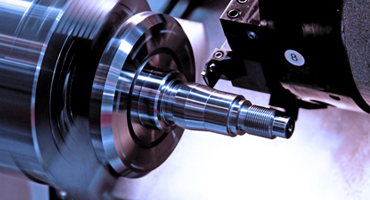
Precision CNC Turning
Surface Finishing
Precision Deburring & Inspection
Quality Standards and Certifications for Robotics Machining
ISO 9001:2015
AS9100 Rev D
CMM Inspection
Material Traceability
Common Machining Challenges for Robotic Components
Lightweight vs. Rigidity Trade-Off
Complex Geometry Machining Errors
Batch Consistency at Scale
Thermal Deformation During Machining
How SOMI Custom Parts Supports the Robotics Industry
Frequently Asked Questions
What tolerances can CNC machining achieve for robotic components?
Which materials are best for CNC machined robot arm parts?
Why is 5-axis CNC machining preferred for robotic parts?
Can CNC machining produce lightweight robotic components?
How do I choose a CNC machining partner for robotics projects?
Conclusion