Comparing Custom Metal Stamping Parts Suppliers: What to Look For
Choosing the right supplier for custom metal stamping parts is a critical decision that directly impacts product quality, manufacturing costs, and overall supply chain reliability. A superior supplier does more than just fabricate components; they become a strategic partner who actively contributes to design feasibility, cost management, consistent quality, and the long-term stability of your production lines. A supplier's performance is pivotal, affecting not only the price and quality of the final consumer products but also their market competitiveness and viability.
As we navigate the complexities of sourcing, this guide will walk you through the essential considerations for selecting a supplier for custom metal stamping parts. We will cover crucial evaluation points, including industry experience, quality control systems, technical capabilities, production capacity, tooling and engineering support, cost-effectiveness, communication responsiveness, and industry reputation. Making the right choice involves more than comparing prices; it requires a strategic evaluation of quality, reliability, and compliance to build a resilient and cost-effective supply chain.

Evaluating Experience and Expertise for Custom Metal Stamping Parts
When selecting a supplier, their experience and expertise are foundational pillars that predict the success of your project. A seasoned supplier brings more than just manufacturing capabilities; they provide invaluable foresight, problem-solving skills, and a deep understanding of industry nuances. This experience translates directly into higher quality parts, more efficient production, and a smoother partnership.
The Value of Industry-Specific Experience in Custom Metal Stamping Parts
A supplier with extensive experience in your specific industry is a significant asset. Their familiarity with the unique requirements, standards, and challenges of your sector can dramatically improve the quality and efficiency of a project. For example, a supplier with a background in aerospace and automotive manufacturing will inherently understand the critical importance of tight tolerances and stringent safety standards. This specialized knowledge allows them to anticipate potential issues early in the design phase and suggest materials or process adjustments that can enhance performance and reduce costs.
Key advantages of partnering with an industry-specific expert include:
- Knowledge of Standards: They are well-versed in industry-specific regulations and quality standards (e.g., for medical, automotive, or aerospace applications), ensuring your parts are compliant from the start.
- Material Expertise: An experienced supplier can recommend the ideal materials for your application based on their unique properties and behavior during stamping, balancing durability, cost, and performance.
- Problem-Solving: Having encountered a wide array of design and production challenges, they can proactively identify and mitigate risks, preventing costly delays and errors.
- Design Optimization: They can provide crucial design-for-manufacturability (DFM) feedback, suggesting modifications that will improve part quality, streamline production, and lower overall expenses.
Assessing a Supplier's Business Longevity and Stability
A supplier's longevity in the business is often a strong indicator of their reliability and stability. A company that has operated for many years is likely to have a deep understanding of various stamping processes, materials, and industry standards. This long-term presence suggests they have successfully navigated market fluctuations, maintained strong customer relationships, and consistently delivered quality products.
When evaluating a supplier's stability, consider the following:
- Years in Operation: A long history demonstrates sustained success and a proven track record.
- Financial Health: A financially stable supplier is better equipped to invest in new technology, maintain equipment, and manage raw material procurement without disruption. Look for signs of reinvestment in their company, such as expanding capacity or updating capabilities.
- Client Portfolio and Testimonials: A strong portfolio with long-term clients and positive testimonials or case studies indicates reliability and customer satisfaction.
- Supply Chain Relationships: Inquire about their relationships with material sources. Established suppliers often have robust, long-standing connections with their own network, ensuring a dependable supply of high-quality materials and contingency plans for supply chain interruptions.
Anticipating Challenges with Experienced Custom Metal Stamping Parts Suppliers
Even the most experienced suppliers can face challenges. However, a key differentiator is how they anticipate and manage these issues. Proactive communication and transparency about potential hurdles are signs of a trustworthy partner.
Common challenges in metal stamping include:
- Material-Related Issues: Problems like cracking or deformation can occur during the stamping process. An experienced supplier mitigates this through careful material selection and pre-stamping quality checks.
- Tooling and Equipment Wear: Tools can deteriorate without regular maintenance, affecting part quality. A reliable supplier will have a rigorous maintenance schedule and thorough pre-project equipment checks to ensure everything functions properly.
- Volatile Material Costs: The prices of raw metals like steel and aluminum can be highly volatile, impacting project budgets. Experienced suppliers often have strategic sourcing plans and strong supplier relationships to help manage these fluctuations.
- Meeting Tight Tolerances: Industries like aerospace and medical demand extremely high precision. An experienced supplier leverages advanced quality control, precision die design, and skilled operators to consistently meet these tight tolerances.
By choosing a supplier who not only has the experience but also the foresight to manage these challenges effectively, you can secure a partnership that ensures project success from start to finish.
Ensuring Quality and Certifications for Your Custom Metal Stamping Parts
Quality is non-negotiable when it comes to custom metal stamping parts, as these components are often used in critical applications where failure is not an option. A supplier’s commitment to quality assurance (QA) is a direct reflection of the reliability and performance you can expect from their products. This commitment is best demonstrated through internationally recognized certifications, low defect rates, and a comprehensive quality control system.
Commitment to Quality Management Standards: ISO, IATF, and AS9100 for Custom Metal Stamping Parts
Industry certifications are a powerful indicator of a supplier's dedication to quality. They prove that a company has invested in and adheres to a rigorous, internationally recognized quality management system. When evaluating a potential supplier, look for these key certifications:
ISO 9001:2015: This is the global benchmark for quality management systems. An ISO 9001 certified company has demonstrated its ability to consistently provide products and services that meet customer and regulatory requirements. The certification is based on a process-oriented approach that emphasizes customer focus, leadership engagement, continuous improvement, and evidence-based decision-making.
IATF 16949: Essential for suppliers in the automotive industry, this standard harmonizes ISO 9001 with specific requirements from the International Automotive Task Force (IATF). It goes beyond general quality management to focus on defect prevention, waste reduction, and minimizing variation within the supply chain. An IATF 16949 certification signals a supplier's capability to meet the demanding quality levels of the global automotive sector.
AS9100: This is the quality management standard for the aviation, space, and defense industries. It includes all the requirements of ISO 9001 plus additional criteria for quality and safety specific to aerospace. For components used in these critical sectors, AS9100 certification is a non-negotiable requirement, ensuring the highest levels of reliability and performance.
A supplier holding these certifications demonstrates a proactive commitment to quality that can give customers peace of mind.
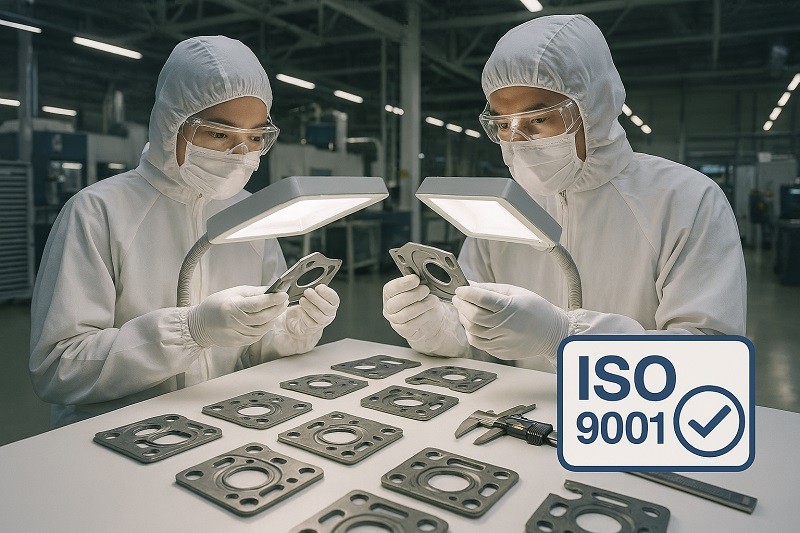
The Importance of Low PPM Rates in Custom Metal Stamping Parts
PPM (Parts Per Million) is a critical metric used to measure the rate of defects found in a production batch. It quantifies the number of non-conforming parts per one million units produced or shipped. A lower PPM rate is a direct indicator of a supplier's manufacturing precision and process control.
While the "acceptable" PPM can vary by industry and part complexity, best-in-class metal stamping suppliers strive for exceptionally low numbers. Some top-tier companies achieve external PPM rates of less than 5, meaning fewer than five defective parts are found by the customer for every million shipped. In many high-volume industries, a rate of 200 PPM or better is considered the standard for normal production methods. For critical applications requiring "zero defects," suppliers may use additional processes like optical sorting to achieve PPM rates of 20 or better.
When discussing quality with a potential supplier, ask about their internal and external PPM rates. A supplier that actively tracks, reports, and works to improve this metric is one that is truly committed to quality.
Robust Quality Control Processes and Testing for Custom Metal Stamping Parts
A robust quality control (QC) system is more than just a final inspection. It is a comprehensive process that is integrated into every stage of manufacturing, from initial design to final packaging, to ensure that every part meets specifications. A thorough QC process should include:
- Pre-Fabrication Inspections: This begins with verifying that raw materials meet the required properties and specifications. It also includes processes like Advanced Product Quality Planning (APQP), which establishes a framework for all manufacturing procedures to ensure they meet client requirements.
- In-Process Monitoring: Quality checks should be performed at various stages of production to detect and address any deviations from the standard in real-time. This can involve using statistical process control (SPC) systems to monitor and document fabrication as it happens.
- Post-Fabrication Testing and Confirmation: Once parts are produced, they must undergo a final battery of tests to verify their quality and integrity. This may include:
- Dimensional Inspection: Using tools like Coordinate Measuring Machines (CMM) and optical vision systems to ensure parts meet exact dimensional and tolerance requirements.
- Mechanical Testing: Conducting tensile tests, hardness tests, and impact tests to verify the material's strength and durability.
- Non-Destructive Testing (NDT): Employing methods like ultrasonic or X-ray inspection to check for internal flaws without damaging the part.
By implementing a multi-stage quality assurance program, a supplier can prevent defects, ensure parts meet design specifications, and guarantee they will perform reliably in their intended application.
Understanding Production Capabilities and Capacity for Custom Metal Stamping Parts
A supplier's production capabilities and capacity are the engine that drives your supply chain. It's crucial to partner with a manufacturer who not only has the right equipment and technical know-how but also the ability to scale with your demand and consistently deliver on time. Evaluating these aspects thoroughly will prevent bottlenecks, ensure product quality, and support your business's growth trajectory.
Advanced Equipment and Technology in Custom Metal Stamping Parts Manufacturing
The technology and equipment a supplier uses have a direct impact on the precision, efficiency, and quality of the final parts. A manufacturer that invests in modern machinery demonstrates a commitment to excellence and innovation.
Key technological indicators to look for include:
- Modern Press Fleet: Look for a range of press types (mechanical, hydraulic, servo) with varying tonnage capacities (from 10 to over 400 tons). This versatility allows them to handle a wide variety of part sizes and complexities.
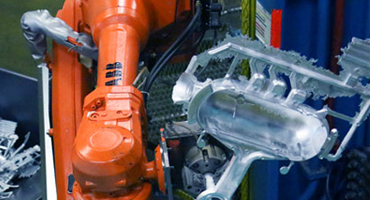
- Automation and Robotics: The integration of automation, such as robotic welding and quick-change tooling, standardizes processes, which can increase production capacity by up to 30%, reduce manual errors, and improve consistency across high-volume runs.
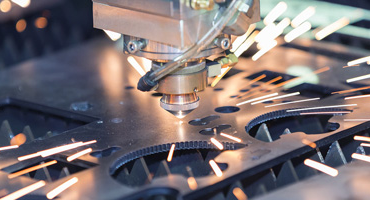
- Advanced CNC Machinery: Computer-Numerical-Control (CNC) machines and laser cutting equipment enable higher precision, faster production times, and greater design flexibility. They are essential for creating complex parts with tight tolerances.
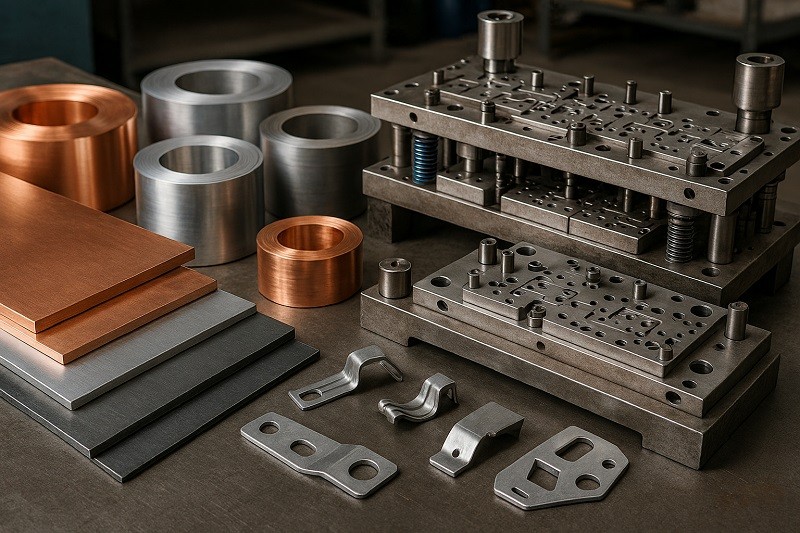
- In-House Tooling Capabilities: A supplier with an in-house tool and die shop can design, build, and maintain custom tooling. This control leads to better quality, faster problem-solving, and reduced lead times, as there is no dependency on external toolmakers.
A supplier committed to leveraging advanced technology is better positioned to produce high-quality, accurate parts efficiently, ultimately saving you time and money.
Scalability and Production Volume for Custom Metal Stamping Parts
Your supplier should be a partner in your growth, capable of adapting to your changing production needs. Whether you require small batches for prototyping or high-volume runs for mass production, their ability to scale is critical.
When assessing scalability, consider the following:
- Production Range: Can the supplier efficiently handle both low-volume and high-volume production runs? A flexible partner can support your project from the initial prototype phase all the way to full-scale production, which is crucial for managing fluctuating market demand.
- Facility and Equipment Capacity: Assess their manufacturing facility to ensure they have the physical space and the number of presses needed to meet your volume requirements, both now and in the future. Some leading manufacturers have over 160,000 sq. ft. of dedicated stamping space to support customer needs.
- Proven Track Record: Have they successfully scaled production for other clients? Ask for case studies or references that demonstrate their ability to increase output without compromising quality or delivery schedules. The global metal stamping market is projected to grow significantly, reaching $296.13 billion by 2030, highlighting the importance of choosing a partner capable of growing with the market.
Assessing Lead Times and On-Time Delivery for Custom Metal Stamping Parts
On-time delivery is paramount to keeping your production lines moving and meeting your own customer commitments. A supplier's lead time—the period from order initiation to project completion—and their on-time delivery (OTD) performance are crucial metrics to evaluate.
Factors to assess include:
- Average Lead Time: The average lead time for custom metal fabrication can range from a few days for simple projects to several months for complex ones. Clarify the supplier's typical turnaround time for projects similar to yours. Keep in mind that processes like custom tooling design can add 2-4 weeks to the initial timeline.
- On-Time Delivery (OTD) Rate: A reliable supplier should have a high OTD rate, ideally 98% or better. Ask for their performance data over the past 12-24 months to verify their track record.
- Proactive Communication: How does the supplier manage potential delays? A trustworthy partner will maintain open and transparent communication, providing regular updates on order status and proactively addressing any issues that may arise.
- Logistical Planning: Effective planning, scheduling, and inventory management are the foundation of timely delivery. Suppliers using advanced planning software can optimize production, identify potential bottlenecks, and ensure a smooth workflow.
Clear communication and realistic expectations are key to managing lead times effectively. Confirming these details at the outset will help you avoid costly delays and ensure a predictable, reliable supply chain.
Cost-Effectiveness and Transparency in Custom Metal Stamping Parts Sourcing
While quality and capability are paramount, cost is inevitably a deciding factor in supplier selection. However, the goal should not be to simply find the lowest price, but to achieve the best overall value. This requires a focus on total cost of ownership (TCO), which includes not just the per-part price but also factors like tooling, quality, delivery, and long-term reliability. A transparent and collaborative supplier can help you achieve competitive pricing without sacrificing the quality your products depend on.
Detailed Cost Breakdowns for Custom Metal Stamping Parts
A trustworthy supplier should be willing to provide a clear and detailed cost breakdown, helping you understand exactly what you are paying for. A comprehensive quote for custom metal stamping parts is a mark of transparency and professionalism.
Key components of a detailed cost breakdown include:
- Tooling and Die Costs: This is often the largest initial investment. The quote should specify the cost of designing and fabricating the custom die. The cost will vary based on complexity (e.g., single-stage vs. progressive die) and the expected lifespan of the tool. Some suppliers offer different models, such as full customer ownership of the die or amortization of the cost into the unit price over time.
- Material Costs: This cost is influenced by the type of metal chosen (steel, aluminum, copper, etc.), its thickness, and current market prices.
- Production Costs: This includes the labor and operational costs for running the stamping presses. High-volume orders benefit from economies of scale, as the setup and fixed costs are spread across more units, lowering the cost per part.
- Secondary Processing Costs: Any additional operations, such as finishing, heat treating, plating, or assembly, should be itemized separately.
- Quality Control and Inspection: Costs associated with quality assurance measures, testing, and documentation should also be transparent.
Understanding these individual cost drivers allows you to have more productive conversations with your supplier about potential cost-saving measures, such as design optimizations or material alternatives.
The Role of Value-Added Services in Custom Metal Stamping Parts
Value-added services are secondary operations offered by a supplier that go beyond basic stamping. Partnering with a "one-stop-shop" that provides these services can significantly streamline your supply chain, reduce logistical complexity, and lower your total cost of ownership. Instead of managing multiple vendors for fabrication, finishing, and assembly, you can consolidate these tasks with a single, accountable partner.
Common value-added services in metal stamping include:
- Assembly and Welding: Stamped parts can be assembled or welded (spot, MIG, TIG) into more complex sub-assemblies.
- Finishing and Coating: Services like powder coating, anodizing, and electroplating (zinc plating) enhance corrosion resistance and aesthetic appearance.
- Heat Treating: Processes like annealing or tempering can alter the metal's properties to improve ductility or strength for better performance.
- Kitting and Custom Packaging: Parts can be kitted with other components or custom-packaged for efficient receiving and use on your assembly line.
- Logistical Support: Some suppliers offer direct shipping to end customers or just-in-time (JIT) delivery to help manage your inventory.
These services reduce lead times by eliminating the need to ship parts between different vendors, a process that can add weeks to your timeline. They also improve quality control, as a single supplier manages the entire process from fabrication to finishing.

Competitive Pricing Without Compromising Quality for Custom Metal Stamping Parts
Achieving a competitive price doesn't have to mean cutting corners on quality. A strategic approach to sourcing and a collaborative relationship with your supplier can unlock significant cost savings.
Here are some strategies to secure competitive pricing while maintaining high standards:
- Design for Manufacturability (DFM): Work with your supplier's engineering team early in the design process. They can provide feedback to simplify part designs, eliminate unnecessary features, and optimize material usage, all of which reduce costs. For example, using parallel edges where possible can allow multiple parts to be run simultaneously.
- Material Optimization: Consult with your supplier to select the most cost-effective material that still meets your performance requirements. Sometimes, an alternative alloy can provide comparable strength and durability at a lower price.
- Leverage Economies of Scale: High-volume production significantly lowers the per-part cost. Where possible, consolidate orders or plan for larger batch sizes to take advantage of these savings.
- Relax Tolerances Where Possible: While some features require tight tolerances, others may not. Understand which dimensions are critical and relax tolerances on non-essential features to reduce tooling complexity and cost.
- Build Long-Term Supplier Relationships: Establishing a long-term partnership with a supplier can lead to better pricing, more reliable deliveries, and a quicker response in urgent situations.
Ultimately, the goal is to find a supplier who acts as a partner, working with you to find the most cost-effective solutions for your manufacturing needs without ever compromising on the quality and reliability of your parts.
Communication, Flexibility, and Reputation for Custom Metal Stamping Parts Suppliers
Beyond the technical specifications and cost sheets, the "soft skills" of a potential supplier are often what transform a transactional relationship into a successful long-term partnership. A supplier's commitment to clear communication, their willingness to adapt to your needs, and their proven industry reputation are crucial factors that ensure a project's smooth execution and ultimate success.
The Importance of Clear Communication and Responsiveness in Custom Metal Stamping Parts Projects
Effective communication is the foundation of any successful manufacturing project. Misunderstandings can lead to costly errors, rework, and delays. A supplier who prioritizes clear, proactive, and responsive communication is invaluable.
Key aspects of strong communication include:
- Proactive Updates: A good partner doesn't wait for you to ask for an update. They anticipate your needs and provide regular progress reports, keeping you informed about timelines, potential challenges, and any deviations from the original plan.
- Responsiveness: Time is critical in manufacturing. A supplier should respond to your inquiries and concerns quickly and effectively. Quick response times ensure that issues are resolved before they can escalate and impact production deadlines.
- Single Point of Contact: Having a dedicated project manager or point of contact simplifies communication, ensures accountability, and helps build a strong working relationship.
- Collaborative Approach: Look for a supplier who views the relationship as a collaboration. They should actively engage with your team, listen to your needs, and work together to find solutions, building a foundation of trust and transparency.
Open and clear communication channels are essential for navigating the complexities of custom manufacturing and ensuring that everyone remains aligned from start to finish.
Flexibility and Customization Options for Your Custom Metal Stamping Parts
Every project has unique requirements, and your supplier should have the flexibility to tailor their processes to meet your specific needs. This adaptability is a hallmark of a customer-focused manufacturer and a key benefit of custom metal stamping.
Look for a supplier that demonstrates flexibility in the following areas:
- Design and Engineering: A flexible partner will offer design and engineering support to help optimize your parts for manufacturability. They can collaborate on refining designs to improve strength, reduce waste, or simplify production.
- Production Volume: Your supplier should be able to accommodate a wide range of production volumes, from small-batch prototypes to large-scale, high-volume production runs. This allows you to scale up or down as your market demands change.
- Prototyping Services: The availability of rapid prototyping is a significant advantage. It allows you to test and validate your designs, make necessary adjustments, and refine the manufacturing process before committing to full-scale production. This minimizes risk and can shorten your time to market.
- Material and Process Options: A versatile supplier will be proficient in various stamping techniques (e.g., progressive die, deep draw, multi-slide) and can work with a wide array of materials to find the perfect fit for your application's performance and budget requirements.
A supplier that offers strong customization capabilities can adapt to your project's evolving needs, ensuring a final product that is perfectly tailored to your specifications.
Gathering References and Assessing Industry Reputation for Custom Metal Stamping Parts Suppliers
A supplier's reputation is a powerful testament to their reliability and quality. Before committing to a partnership, it's essential to conduct due diligence by assessing their track record within the industry.
Here's how you can evaluate a supplier's reputation:
- Request Customer References: Ask for references from current or past clients, particularly those in your industry. Speaking directly with these references can provide candid insights into their experience with the supplier's quality, communication, and on-time delivery.
- Look for Case Studies and Testimonials: Many reputable suppliers showcase their successes through case studies and testimonials on their website. These can provide real-world examples of their capabilities and the types of challenges they've successfully addressed.
- Evaluate Industry Experience: A supplier with a proven track record in your specific industry will better understand your unique challenges and requirements. For example, a supplier focused on the automotive sector will be an expert in the rigorous Production Part Approval Process (PPAP).
- Check for Longevity: A company that has been in business for many years has likely built a stable and reliable operation, proving its ability to consistently deliver on its promises.
Choosing a supplier is about more than just finding someone to produce parts; it's about finding a strategic partner committed to quality and invested in your success.
Conclusion
Selecting the ideal custom metal stamping parts supplier goes beyond just finding a manufacturer; it’s about establishing a partnership that drives success for your projects. By carefully considering experience, quality control, technical capabilities, production capacity, cost, and communication, you can ensure your parts meet the highest standards.
By following these guidelines, you can make an informed decision, secure a reliable partnership, and ultimately achieve high-quality custom metal stamping parts for your needs. At SOMI Custom Parts, we are dedicated to providing exceptional custom metal stamping parts, alongside comprehensive OEM/ODM services, ensuring our clients receive top-tier manufacturing solutions. We encourage you to share this article with your network and welcome any further discussion on this crucial topic.