CNC Machining vs Injection Molding: Which Process Is Right for Your Project?
Introduction: Why the CNC vs Injection Molding Decision Deserves a Framework
Choosing between CNC machining and injection molding is one of the most consequential decisions in custom parts manufacturing. Industry data and engineering experience consistently show that selecting the wrong process can inflate project cost by 30% to 80% through hidden tooling charges, design rework, and scrapped inventory. In 2026, the stakes are even higher: the global injection molding market is projected to reach USD 327.5 billion this year with a 5.1% CAGR through 2033, while CNC plastic machining services are growing at 5.3% annually, from USD 614 million in 2026 toward USD 950 million by 2035. This guide gives engineers and buyers a practical, data-backed framework for deciding which process fits their volume, tolerance, material, and timeline requirements.
If you are evaluating custom parts for a new product, we also recommend reading our manufacturing blog for related guidance, or jumping straight to a decision once you understand the five questions outlined below.
What Is CNC Machining? The Subtractive Process
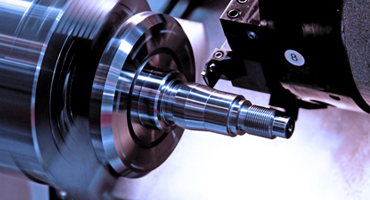
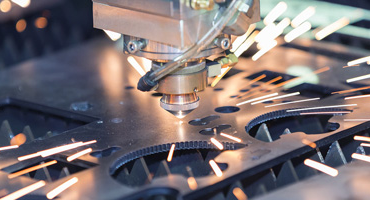
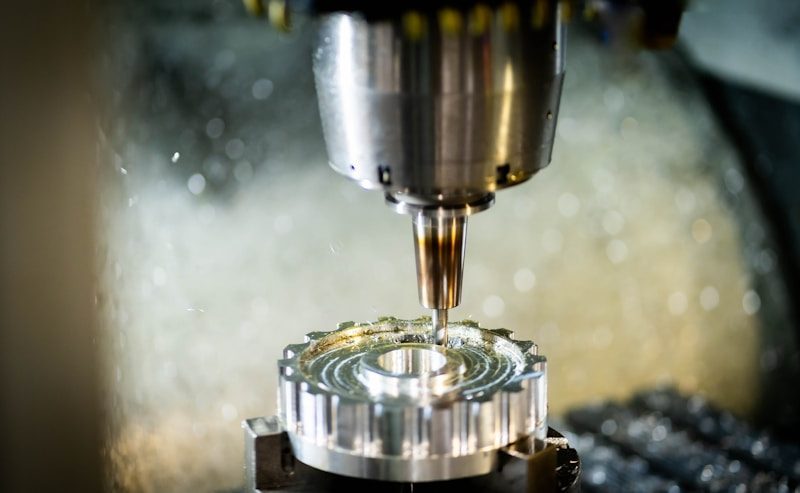
CNC (Computer Numerical Control) machining is a subtractive manufacturing process. A computer-controlled cutting tool removes material from a solid billet, bar, or block, following a toolpath generated from your CAD model. No mold is required, which means the only fixed costs are programming and setup, typically a few hundred dollars per batch.
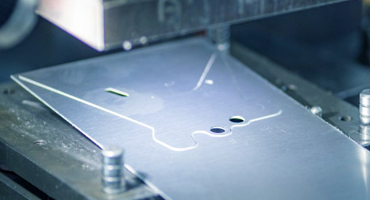
CNC machining routinely holds tolerances of ±0.01 mm to ±0.025 mm, with ±0.005 mm achievable on critical features such as bearing fits and sealing surfaces. First articles are typically delivered in 3 to 7 days, and every design change costs only the price of machining the next part. This makes CNC the default choice for prototypes, low-volume production, metal parts, and any component that demands tight dimensional control.
What Is Injection Molding? The Flow Process
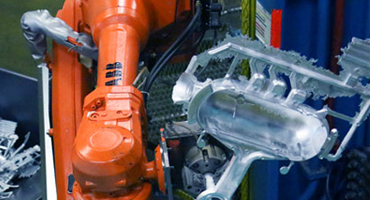
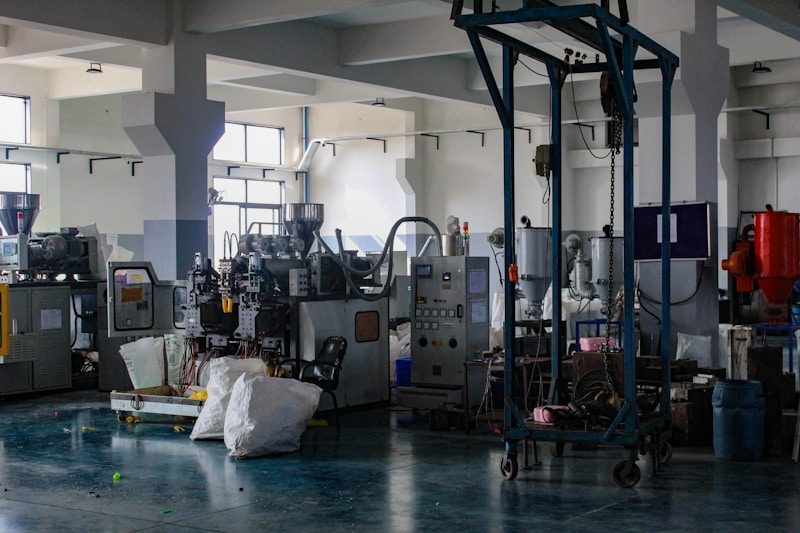
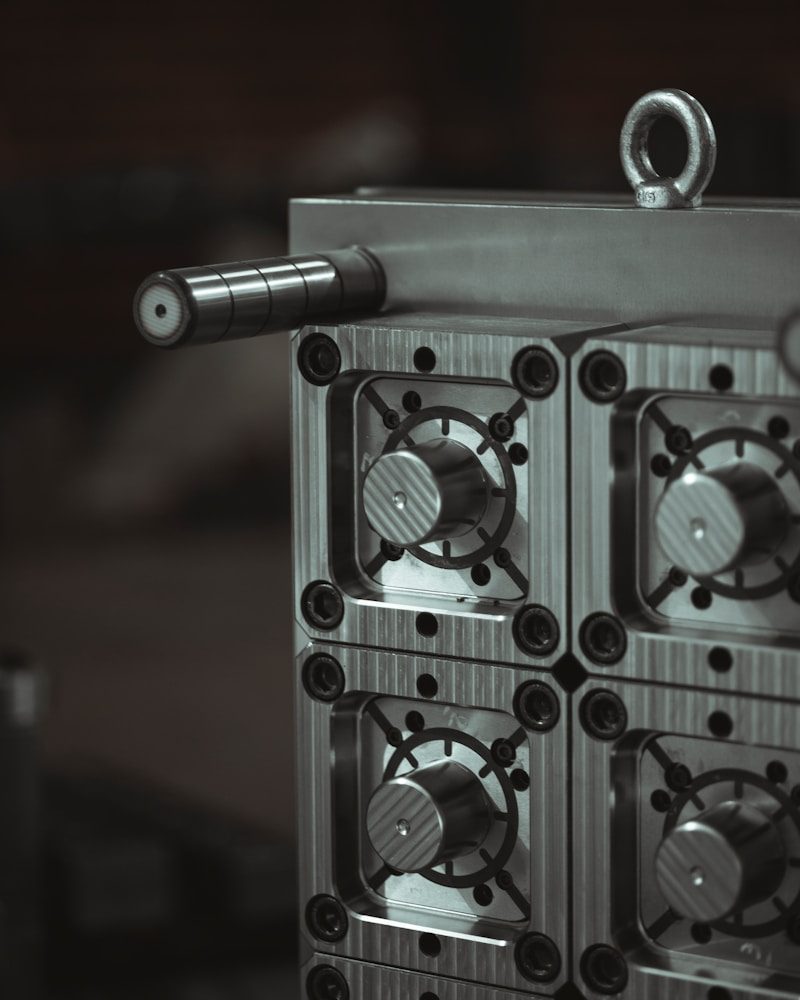
Injection molding is a formative manufacturing process. Molten thermoplastic is injected under high pressure into a precision-machined steel or aluminum mold cavity, where it cools and solidifies into the finished part shape. The mold itself is the large upfront investment, typically USD 3,000 to USD 100,000+ depending on complexity, number of cavities, and expected production life.
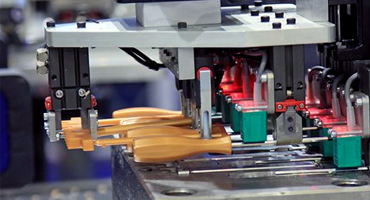
Once the mold exists, the economics are powerful: each molding cycle produces a part in 15 to 90 seconds, yielding per-unit costs as low as USD 0.50 to USD 5. Injection molding is the industry standard for high-volume plastic parts from 1,000 to 1,000,000+ units, and it enables design features such as snap-fits, living hinges, and complex internal channels that are difficult or impossible to machine.
Key Differences at a Glance
The table below summarizes the fundamental trade-offs between the two processes. These differences drive every downstream decision in this guide.
| Factor | CNC Machining | Injection Molding |
|---|---|---|
| Process type | Subtractive (solid to part) | Formative (melt to part) |
| Upfront tooling cost | None (only programming/setup) | USD 3,000 - USD 100,000+ mold |
| Typical unit cost | USD 15 - USD 60 | USD 0.50 - USD 5 at scale |
| Typical tolerance | ±0.01 mm to ±0.025 mm | ±0.05 mm to ±0.15 mm |
| Time to first part | 3 - 7 days | 4 - 8 weeks (mold) + 1 - 3 weeks |
| Material range | Metals and plastics | Thermoplastics and thermosets |
| Design change cost | Low (next part) | High (mold modification) |
| Material waste | 40% - 90% chips (recyclable) | Near-zero (sprues reground) |
Cost Comparison: Where Is the Break-Even Point?
Injection molding has a high fixed cost (the mold) and a low variable cost (per-part cycle). CNC machining has near-zero fixed cost but a constant per-part cost because each part requires dedicated machine time. The break-even volume is the quantity at which the mold pays for itself.
A representative worked example: with a USD 12,000 mold, a USD 2 molded unit cost, and a USD 25 CNC unit cost, the break-even equation is 12,000 + 2Q = 25Q, giving Q ≈ 522 units. Above roughly 500 to 600 units, molding becomes more economical; below it, CNC is safer. The crossover moves earlier for simple, small parts and much later for large or complex parts.
Simple small parts
A USD 3,000 aluminum mold can break even at roughly 400 units, making rapid tooling viable for early market validation.
Complex large parts
A USD 80,000 steel mold for a large structural component may require up to 15,000 units before molding wins.
Hidden TCO factors
Engineering changes cost USD 500 - USD 5,000+ per mold revision, and process startup consumes 20 - 50 scrap shots to stabilize temperature and pressure.
For a full picture of quoting and cost drivers, see our guide on custom manufacturing products and the capabilities we offer across processes.
Tolerance and Precision: When CNC Is the Only Option
CNC machining holds ±0.01 mm to ±0.025 mm as standard and ±0.005 mm on critical features, with excellent flatness, hole accuracy, and true machined threads. Injection molding typically achieves ±0.05 mm to ±0.15 mm, with commercial dimensions often varying ±0.2 mm to ±0.5 mm because of material shrinkage and process variation.
If your design includes press-fit interfaces, bearing seats, locating surfaces, or sealing grooves that need ±0.02 mm or tighter, CNC machining is the safer choice even at higher volumes. Aerospace, medical device, and semiconductor equipment programs rely on CNC-machined parts where traceability and tight tolerances are mandatory under standards such as ISO 9001 and AS9100. A common hybrid practice is to mold near-net-shape and then CNC-machine critical features as a secondary operation, combining molding economics with machining precision.
Material Selection: Metals vs Thermoplastics
Material is the first filter in the decision framework. If your part must be aluminum, steel, titanium, brass, or copper, CNC machining is almost always the answer; injection molding is limited to thermoplastics and thermosets. For plastics such as ABS, nylon, POM, PC, and PEEK, both processes work, but the material properties differ.
CNC-machined plastics are cut from extruded or compression-molded billets, offering isotropic mechanical strength and exact chemical resistance. Molded parts can exhibit weld lines and anisotropic strength from polymer flow. There is also a procurement angle: for a low-volume run of glass-filled nylon, injection molding would require a 500 kg minimum resin order, while CNC machining can simply use a single rod purchased for tens of dollars.
Lead Time and Design Flexibility
CNC machining delivers first parts in 3 to 7 days because there is no tooling to build. Injection molding requires 4 to 8 weeks for mold fabrication plus 1 to 3 weeks for the production run before the first part leaves the press. If you need parts in hand within two weeks, CNC is effectively the only option.
Design flexibility follows the same pattern. Every design change with CNC costs nothing beyond the next part; with injection molding, every revision means modifying or remaking the mold at USD 2,000 to USD 20,000 per change. Engineering teams frequently report losing USD 40,000+ on mold revisions after committing to tooling too early. As a rule of thumb, short product lifecycles (under one year) favor CNC to reduce risk, while products expected to sell for three to five years justify molding's margin advantage.
Geometry and Design-for-Manufacturing Rules
Each process has its own DFM constraints, and knowing them prevents expensive surprises.
CNC DFM rules
Internal corners need tool clearance radii, deep cavities increase machining time, and undercuts require multi-axis capability. CNC excels at deep precision pockets, thin metal walls, high-strength internal threads, and solid sections.
Injection molding DFM rules
Parts need draft angles of 1 to 3 degrees, uniform wall thickness of 1.5 to 4 mm to avoid sink marks and warpage, and undercuts require costly side actions. Molding excels at snap-fits, living hinges, ribs, and bosses.
In 2026, the practical answer is that geometry complexity means different things for each process: CNC complexity is about tool access, while molding complexity is about ejection and flow. Reviewing your design with a DFM-aware partner before committing to a process can save 15% to 40% of cost. You can send us your drawings for a DFM review at any stage.
2026 Trends: The Hybrid Shift From CNC to Injection Molding
The industry no longer treats these processes as either/or. Three trends are reshaping the decision in 2026:
AI-optimized tooling
AI now predicts plastic flow in molds with up to 99% accuracy, cutting trial-and-error from molding development and accelerating time to production.
Bridge tooling
Companies CNC-machine quick-turn aluminum molds to deliver 500 to 2,000 molded parts in days instead of months, validating demand before investing in steel tooling.
On-demand CNC
Automated cloud-based CNC services have made low-volume machining fast enough to replace molding for many specialized medical and aerospace components.
The most cost-effective product development path uses both processes in sequence: CNC-machine 5 to 50 prototypes to validate design and test with customers; CNC-machine the first 100 to 500 production units as bridge production while the mold is built; then switch to injection molding at 1,000+ units to reduce per-part cost by 70% to 90%. This staged approach minimizes financial risk and maximizes cash flow.
How SOMI Custom Parts Can Help
SOMI Custom Parts is a precision parts manufacturer with deep experience across CNC machining for metals and engineering plastics, backed by rigorous quality systems and a DFM-first engineering culture. We help customers at every stage of the product lifecycle, from machined prototypes to low-volume bridge runs, and we provide honest process guidance so you never pay for tooling you do not need.
- CNC machining with tolerances down to ±0.005 mm on critical features, supported by CMM inspection and documented quality control.
- Experienced engineering team that reviews your drawings, flags manufacturability risks, and recommends the right process for your volume and tolerance.
- Transparent quoting with DFM feedback, so you can compare total cost of ownership rather than unit price alone.
Explore our CNC machining parts to see the range of components we produce, learn more about our quality systems and certifications, or contact our engineering team with your drawings for a process recommendation.
Frequently Asked Questions
Which is cheaper: CNC machining or injection molding?
It depends on volume. Below roughly 500 units, CNC machining is almost always cheaper because there is no mold cost. Above 500 to 2,000 units, the crossover depends on mold cost and part complexity; above 5,000 units, injection molding typically delivers dramatically lower per-unit cost, often USD 0.50 to USD 5 versus USD 15 to USD 60 for CNC.
What volume justifies injection molding over CNC machining?
As a general guide: below 500 parts per year, use CNC; 500 to 2,000 parts, evaluate both with a break-even calculation; above 2,000 parts per year, injection molding is usually more economical. The crossover moves earlier for simple small parts (around 400 units with a low-cost aluminum mold) and later for large complex parts (up to 15,000 units).
What tolerances does CNC machining achieve compared to injection molding?
CNC machining routinely holds ±0.01 mm to ±0.025 mm, and ±0.005 mm on critical features. Injection molding typically achieves ±0.05 mm to ±0.15 mm, with commercial dimensions varying ±0.2 mm to ±0.5 mm due to shrinkage. For bearing fits, press fits, and sealing surfaces, CNC is the safer process.
Can injection molded parts be machined to tighter tolerances?
Yes. This is called secondary machining, and it is common for precision features such as bearing bores, locating surfaces, and thread inserts. The part is molded near-net-shape, then CNC-machined on critical features, combining molding's cost efficiency at volume with CNC's tolerance capability.
How long does it take to get parts from each process?
CNC machining delivers first parts in 3 to 7 days. Injection molding requires 4 to 8 weeks for mold fabrication, then 1 to 3 weeks for the production run. If parts are needed within two weeks, CNC is the only practical option.
Conclusion
CNC machining and injection molding are complementary stages of a product's lifecycle, not competing alternatives. CNC validates the design, delivers low-volume and high-precision parts quickly, and covers every metal application. Injection molding scales economics once the design is proven and volumes justify the tooling investment. The winning strategy in 2026 is the hybrid path: machine the prototypes, run bridge production on CNC while the mold is built, then switch to molding at volume.
Whether you are validating a new design or planning a production run, SOMI Custom Parts provides the engineering depth to guide you through the decision. Send us your drawings today for a free DFM review and a process recommendation tailored to your volume, tolerance, and timeline.