A Comprehensive Guide to Liquid Silicone for Mold Making: From Selection to Creation
Your Ultimate Guide to Liquid Silicone for Mold Making
Welcome to the definitive guide on using liquid silicone for mold making. Whether you're a seasoned professional creating complex industrial parts, an artist duplicating detailed sculptures, or a hobbyist making your first soap or candle molds, understanding the nuances of liquid silicone rubber (LSR) is key to success. This versatile material offers unparalleled detail replication, durability, and flexibility, but choosing the right type can be daunting. From cure systems and Shore hardness to mixing and pouring, we'll cover everything you need to know to create flawless, professional-quality molds.
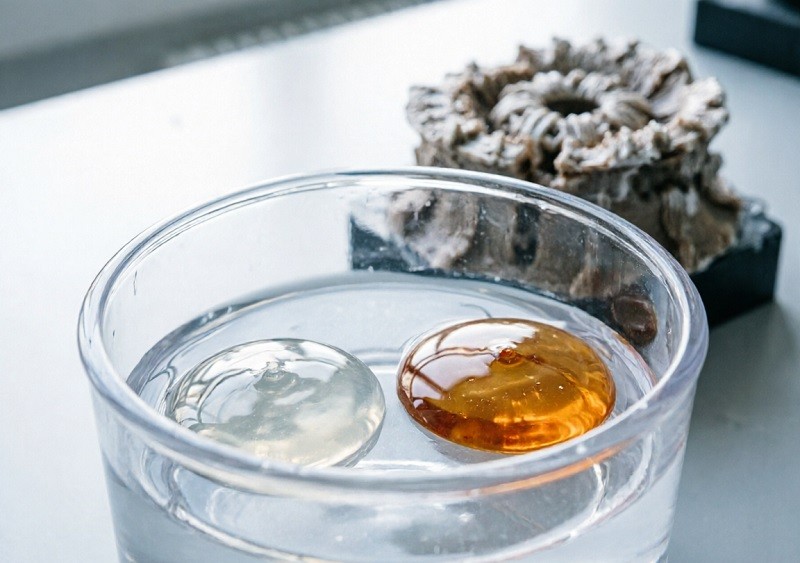
What Exactly is Liquid Silicone for Mold Making?
Liquid silicone for mold making is a two-part thermosetting polymer that, when mixed, cures into a flexible yet durable rubber. Comprised of a base (Part A) and a catalyst (Part B), it transitions from a liquid to a solid at room temperature (RTV) or with heat. Its exceptional properties, such as high-temperature resistance, low shrinkage, and chemical inertness, make it the gold standard for creating high-fidelity molds. Unlike materials like polyurethane or latex, silicone molds are naturally non-stick, simplifying the demolding process and extending the mold's life.
Why Choose Liquid Silicone for Your Molds?
The advantages of using liquid silicone are numerous. Its low viscosity allows it to flow into the most intricate patterns and undercuts, capturing every minute detail of the master model. This precision is essential for applications ranging from jewelry design to prototyping. Furthermore, silicone's inherent flexibility allows for easy removal of cast parts, even those with complex geometries, without damaging the mold or the casting. Its excellent resistance to high temperatures also makes it suitable for casting a wide variety of materials, including resins, waxes, plaster, concrete, and even low-melt metals.
Key Properties to Consider Before You Buy
Before selecting a silicone, it's crucial to understand a few key properties that will dramatically impact your mold's performance:
- Cure System: The chemical reaction that hardens the silicone.
- Shore Hardness: The hardness or softness of the cured rubber.
- Viscosity: The thickness or flowability of the liquid silicone.
- Tear Strength: The resistance of the rubber to tearing.
- Library Life: How long the cured mold will last in storage before degrading.
Understanding Cure Systems: Platinum-Cure vs. Tin-Cure
Liquid silicones are primarily categorized by their catalyst, or curing agent: platinum or tin. This is arguably the most important decision you will make, as it affects cost, durability, and application compatibility.
| Feature | Platinum-Cure (Addition-Cure) | Tin-Cure (Condensation-Cure) |
|---|---|---|
| Durability | Extremely high; long library life (decades) | Lower; shorter library life (1-5 years) |
| Shrinkage | Very low to none (≤0.1%) | Higher shrinkage over time |
| Food/Skin Safe | Often certified as food-safe and skin-safe | Not suitable for food or skin contact |
| Cure Inhibition | Sensitive to sulfur, latex, an d certain chemicals | Less sensitive to inhibition, more forgiving |
| Cost | More expensive | More affordable, budget-friendly |
| Best For | Professional, food-grade, medical, or long-term molds | General crafting, one-off projects, budget-conscious creators |
Platinum-Cure (Addition-Cure) Silicone: The Professional's Choice
Platinum-cured silicones are the top-tier option for mold making. They offer exceptional physical properties, including superior tear strength and a very long library life, meaning your molds can last for decades. They cute with almost no shrinkage, ensuring that your reproductions are dimensionally identical to the original. This precision makes them the go-to choice for aerospace, prototyping, and medical applications. Furthermore, many platinum silicones are certified food-safe and skin-safe, making them perfect for creating baking molds, prosthetic appliances, and more.
Tin-Cure (Condensation-Cure) Silicone: The Economical Workhorse
Tin-cured silicones are a more economical choice, making them popular among artists, hobbyists, and beginners. They are known for being more forgiving, as they are less prone to cure inhibition from contaminants on the master model. While they don't boast the same longevity as platinum-cured types and will shrink slightly over time, they are excellent for projects where extreme long-term stability is not a requirement. They are a reliable and cost-effective solution for creating molds for plaster, resin, and wax casting.
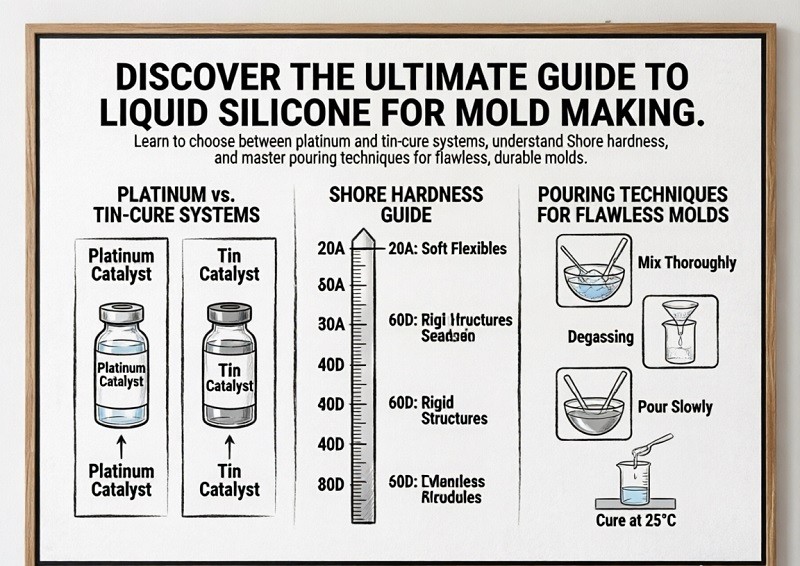
Decoding Shore Hardness: Finding the Right Flexibility
Shore hardness measures the firmness of cured silicone and is typically rated on the Shore A scale. The right hardness depends entirely on your project.
- Very Soft (Shore 00-10A to 15A): Extremely flexible, like a gummy bear. Ideal for molds with deep, complex undercuts or for casting delicate items. The softness allows for easy demolding without breaking the cast part.
- Medium (Shore 20A to 30A): The most common range. This provides a great balance of flexibility and strength. It's versatile enough for a wide range of applications, from candle molds to concrete planters.
- Firm (Shore 35A to 50A+): Less flexible but more durable. Best for flatter, one-piece molds or when casting heavy materials like concrete where the mold needs to hold its shape without distorting.
Choosing a silicone that is too hard for a complex model can make demolding nearly impossible, while a silicone that is too soft may not support the weight of the casting material.
Viscosity and Pourability: How It Affects Your Mold
Viscosity refers to the thickness of the liquid silicone. A low-viscosity silicone flows easily, like maple syrup, making it excellent for capturing fine details as it readily fills every crevice. A higher-viscosity silicone is thicker, like honey, and is better for creating brushed-on molds where you need the material to cling to vertical surfaces without dripping.
Step-by-Step Guide: Making Your First Silicone Mold
Ready to get started? Here’s a simplified process for making a basic pour-on mold:
- Prepare the Master: Secure your original object (the master) to the bottom of a containment box. Ensure the box is sealed to prevent leaks.
- Apply Release Agent: If your master model or box is porous (wood, plaster) or made of a material known to cause cure inhibition (like sulfur clay), apply a suitable release agent.
- Measure and Mix: Carefully measure Part A and Part B by weight according to the manufacturer's instructions (usually 1:1 or 10:1). Mix thoroughly, scraping the sides and bottom of the container, until the color is uniform.
- Degas the Silicone (Optional but Recommended): To eliminate bubbles, place the mixed silicone in a vacuum chamber until it rises and collapses.
- Pour: Pour the silicone in a thin stream into one corner of the mold box, letting it rise slowly and evenly over your master. Do not pour directly onto the object, as this can trap air.
- Cure: Allow the silicone to cure for the time specified in the instructions (typically several hours to a full day).
- Demold: Once fully cured, carefully disassemble the containment box and remove your new, flexible silicone mold.
Common Mistakes to Avoid in Silicone Mold Making
- Incorrect Mixing Ratios: Always measure by weight with a digital scale for accuracy. Eyeballing can lead to a sticky, uncured mess.
- Cure Inhibition: Ensure your master model is free of sulfur, latex, and other contaminants that can prevent platinum silicone from curing.
- Trapped Air Bubbles: Pour high and slow to create a thin stream that helps break bubbles. Vacuum degassing is the most effective method for bubble-free molds.
- Premature Demolding: Be patient! Demolding before the silicone is fully cured will result in a weak, unusable mold.