3D Printing vs. CNC Manufacturing: Exploring Optional Materials and Their Impact
As we navigate the increasingly complex world of manufacturing, choosing the right production method is crucial. Two prominent techniques often considered are 3D Printing and CNC Manufacturing, each offering distinct advantages and limitations when it comes to material selection and overall impact. I'm here to guide you through a comprehensive comparison, focusing specifically on how the optional materials available for CNC Machining, alongside 3D Printing and Injection Molding, influence their suitability for various applications. We'll explore the nuances of each process to help you make informed decisions for your projects.
Understanding the capabilities and constraints of different manufacturing processes, especially concerning the range of CNC Machining Optional Materials, is key to optimizing product design, cost-effectiveness, and production efficiency. Let's dive in and explore the fascinating interplay of these technologies.
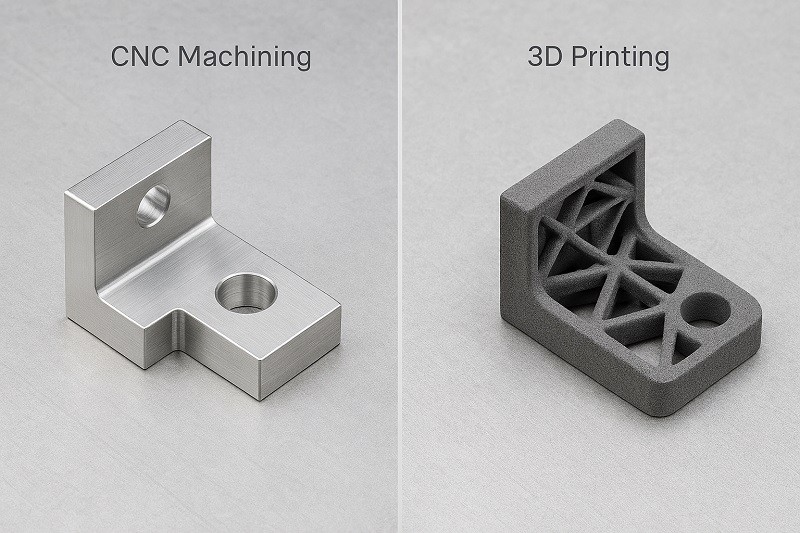
Understanding CNC Machining Optional Materials and Additive Manufacturing
To make an informed decision, it's essential to first grasp the fundamental principles behind CNC machining and 3D printing. These two technologies represent opposing, yet equally powerful, approaches to fabrication: one subtracts, and the other adds.
What is CNC Machining?
CNC (Computer Numerical Control) machining is a cornerstone of modern manufacturing, revered for its precision and reliability. It involves using computer-controlled machines to shape parts by removing material from a solid block.
A Subtractive Process
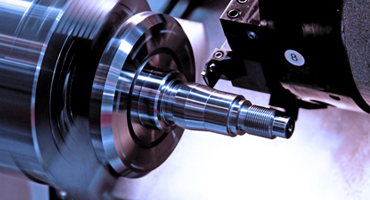
At its core, CNC machining is a subtractive manufacturing method. The process begins with a solid block of material, known as a workpiece or blank. A digital design file, typically a CAD (Computer-Aided Design) model, is translated into a set of instructions called G-code. This code directs the movement of cutting tools (like end mills, drills, and lathes) across the workpiece. The machine meticulously carves away excess material, much like a sculptor chisels a block of stone, until only the final, desired shape remains. This method is renowned for creating parts with excellent mechanical properties, as they retain the inherent strength of the bulk material.
Precision and Control with Various Optional Materials
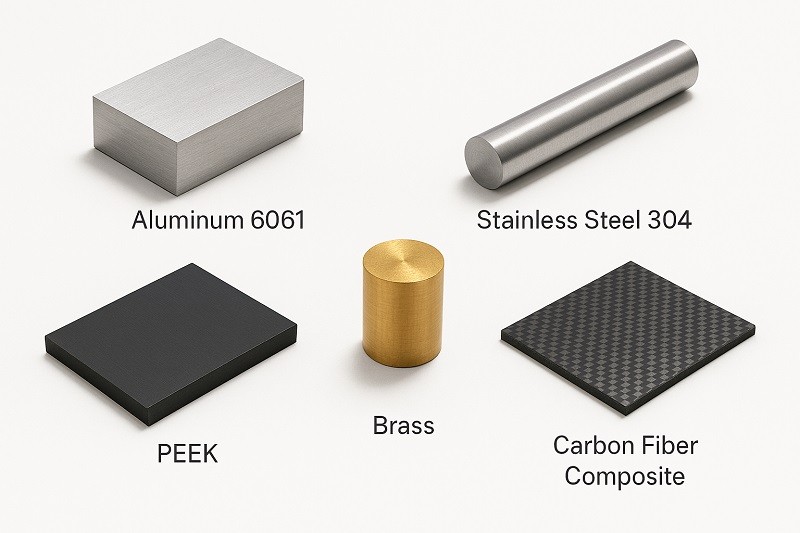
One of the most significant advantages of CNC machining is its exceptional precision and tight control over the final product. Advanced CNC machines can achieve tolerances as fine as ±0.001 inches (0.025 mm), ensuring that parts meet exact specifications with high repeatability. This level of accuracy is critical for applications in industries like aerospace, medical, and automotive, where performance and safety are paramount. Furthermore, CNC machining is not limited to just a few materials. It is compatible with a vast array of robust engineering materials, including various metals (aluminum, steel, titanium, brass), plastics (ABS, polycarbonate, PEEK), wood, and composites. This versatility allows engineers to select the perfect material for their specific strength, weight, and thermal requirements.
What is 3D Printing?
3D printing, also known as additive manufacturing, represents a paradigm shift from traditional methods. Instead of removing material, it builds objects from the ground up, layer by layer.
An Additive Process
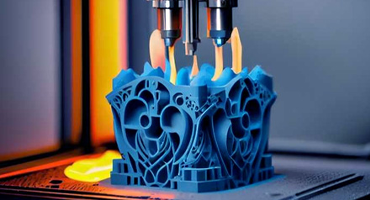
The additive process starts with a digital 3D model, which is "sliced" into hundreds or thousands of thin horizontal layers by specialized software. A 3D printer then reads this file and begins constructing the object by depositing, curing, or fusing material one layer at a time. Common 3D printing technologies include Fused Deposition Modeling (FDM), where a thermoplastic filament is melted and extruded; Stereolithography (SLA), which uses a UV laser to cure liquid resin; and Selective Laser Sintering (SLS), which fuses powdered material together. This layer-by-layer approach unlocks the ability to create incredibly complex geometries that would be impossible to produce with subtractive methods.
Exploring Material Limitations
While 3D printing offers unprecedented design freedom, its material selection, particularly for functional, end-use parts, can be more constrained than that of CNC machining. The materials used must be compatible with the specific printing process, which often means they are formulated as filaments, powders, or liquid resins. While the range of 3D printing materials is rapidly expanding and includes various plastics, resins, and even some metals and composites, their mechanical properties can sometimes fall short of their traditionally manufactured counterparts. For example, the layered nature of 3D printed parts can create anisotropy, meaning the part might be weaker in one direction than another. This is a critical consideration when evaluating materials for high-stress applications.
Deep Dive into CNC Machining Optional Materials: Advantages and Disadvantages
CNC machining's reputation for quality and reliability is built on its ability to produce highly accurate parts from a wide selection of robust materials. However, the process also comes with its own set of challenges, particularly regarding waste and design complexity. Let's delve deeper into the pros and cons.
Benefits of CNC Machining with Diverse Optional Materials
The advantages of CNC machining are most apparent in applications demanding precision, durability, and the use of specific, high-performance materials.
Precision and Tight Tolerances
Precision is the hallmark of CNC machining. The computer-controlled nature of the process eliminates the potential for human error, resulting in exceptional consistency and repeatability from the first part to the last. This technology can produce components with extremely tight tolerances, which is a measure of the permissible variation in a dimension. For critical applications, this means parts will fit and function exactly as designed, every single time. This high degree of accuracy is indispensable for creating complex assemblies, medical implants, and high-performance engine components.
Material Versatility and Optimal Use of CNC Machining Optional Materials
CNC machining's greatest strength lies in its material compatibility. Unlike processes that require specialized material formats, CNC can work with standard, off-the-shelf blocks, bars, and sheets of an enormous variety of materials. This gives designers the freedom to choose a material based purely on its mechanical, thermal, and chemical properties without being limited by the manufacturing process itself.
| Material Category | Common Examples | Key Characteristics & Applications |
|---|---|---|
| Metals | Aluminum (6061, 7075), Stainless Steel (303, 304L), Titanium, Brass, Copper | High strength, durability, thermal conductivity. Used for structural components, enclosures, heatsinks, and prototypes that need to mimic metal parts. |
| Plastics | ABS, Polycarbonate (PC), Nylon, Delrin (POM), PEEK, Acrylic (PMMA) | Lightweight, corrosion-resistant, electrically insulating. Used for enclosures, jigs, fixtures, consumer products, and low-friction components. |
| Composites | G-10, Carbon Fiber Plate | High strength-to-weight ratio, rigidity. Used in high-performance aerospace and automotive applications. |
| Wood | Hardwoods, Softwoods, Plywood | Aesthetic appeal, easily shaped. Used for furniture, decorative items, and architectural models. |
This vast selection ensures that whether you need the biocompatibility of titanium, the high-temperature resistance of PEEK, or the low cost and light weight of ABS, there is an optimal material choice available. Exploring the full range of CNC Machining Optional Materials is key to unlocking the full potential of your design.
Prototyping and Low-Volume Production
While often associated with large-scale production, CNC machining is also an excellent choice for creating prototypes and low-volume runs. It allows for the production of high-fidelity prototypes using the exact same material as the final product, enabling thorough functional and stress testing. Unlike injection molding, CNC machining requires no expensive tooling or molds, making it highly cost-effective for producing anywhere from a single part to several hundred. This ability to quickly machine a few parts for testing a new design or fulfilling a small order provides invaluable flexibility in the product development cycle.
Challenges of CNC Machining with Specific Optional Materials
Despite its many benefits, CNC machining has inherent limitations rooted in its subtractive nature and the physical interaction between the cutting tool and the workpiece.
Material Waste and Cost Considerations for CNC Machining Optional Materials
The most direct consequence of a subtractive process is material waste. The material that is carved away to create the part's geometry becomes chips, which are typically recycled but represent a sunk cost. For simple, blocky parts, this waste might be minimal. However, for complex designs with a low volume-to-stock ratio (often called a low "buy-to-fly" ratio in aerospace), the amount of wasted material can be substantial. When working with expensive materials like titanium or high-performance polymers, this wasted material can significantly inflate the cost of the final part.
Design Limitations and Geometric Complexity
While CNC machines are incredibly precise, they are bound by the physics of cutting tools. A spinning tool has a specific diameter and length, which limits the shapes it can create. For instance:
- Internal Corners: It's impossible to machine a perfectly sharp internal corner, as the corner's radius will always be at least the radius of the cutting tool used.
- Undercuts: Features that are "hidden" from the tool's path, such as an internal groove in a bore, can be difficult or impossible to machine with standard 3-axis machines and may require more complex 5-axis machines or special tooling.
- Deep Pockets: Machining very deep and narrow cavities is challenging because it requires long, slender tools that are prone to deflection and vibration, compromising accuracy and surface finish.
Designers must practice "Design for Manufacturability" (DFM), keeping these tool access constraints in mind to create parts that are both functional and economical to produce.
Machining Plastics: Specific Challenges with Optional Materials
While plastics are a popular choice for CNC machining, they present a unique set of challenges compared to metals. Many plastics have low melting points, which means that the heat generated by the cutting tool can cause the material to melt, gum up the tool, and produce a poor surface finish. Softer plastics can also deflect under cutting pressure, leading to dimensional inaccuracies. To overcome these issues, machinists must use specialized sharp tooling, adjust cutting speeds and feeds to manage heat, and sometimes employ coolants. Understanding these nuances is crucial for successfully machining plastic components to the required specifications.
3D Printing: Advantages and Disadvantages Affecting Material Choices
3D printing's additive approach fundamentally changes the rules of manufacturing. It excels where CNC machining struggles—in complexity and material efficiency—but faces its own set of hurdles regarding material strength, surface finish, and production speed.
Advantages of 3D Printing and its Material Scope
Additive manufacturing opens up a world of possibilities for designers and engineers, allowing them to create parts that were once considered impossible.
Reduced Material Waste
In stark contrast to the subtractive nature of CNC machining, 3D printing is an additive process that is inherently resource-efficient. It uses only the material necessary to build the part and its support structures. This results in significantly less waste, especially when compared to machining a complex part from a large block of expensive material. For high-value materials like aerospace-grade polymers or metal powders, this efficiency can lead to substantial cost savings, making 3D printing an economically and environmentally attractive option.
Design Freedom and Complex Geometries
This is where 3D printing truly shines. Because parts are built layer by layer, designers are freed from the constraints of traditional manufacturing methods. This allows for the creation of:
- Complex Internal Geometries: Intricate internal cooling channels, lattice structures for weight reduction, and hidden features can be easily incorporated into a design.
- Part Consolidation: Multiple components of an assembly can be redesigned and printed as a single, complex part. This reduces assembly time, eliminates potential points of failure (like joints or fasteners), and often results in a lighter, stronger final product.
- Organic and Customized Shapes: 3D printing can effortlessly produce the organic curves and customized forms required for medical implants, ergonomic grips, and bespoke consumer products.
This unparalleled design freedom empowers engineers to optimize parts for performance rather than for manufacturability.
Rapid Prototyping
The term "rapid prototyping" was practically born from 3D printing. The ability to go from a digital CAD file to a physical object in a matter of hours is a game-changer for product development. Engineers and designers can print multiple design iterations in a single day, allowing them to test form, fit, and function quickly. This drastically shortens the development cycle, reduces the cost of design errors, and enables companies to bring better products to market faster. While CNC is also used for prototypes, the speed and automation of 3D printing, especially for early-stage conceptual models, are unmatched.
Disadvantages of 3D Printing: Material and Performance Concerns
While 3D printing's advantages are compelling, it's crucial to understand its limitations, many of which are tied to the materials and the printing process itself.
Limited Material Options and Their Properties
Although the library of 3D printing materials is growing, it is still less extensive than the vast catalogue of materials available for CNC machining. More importantly, the mechanical properties of 3D printed materials often differ from their bulk counterparts. The layer-by-layer fusion process can create microscopic voids and directional weaknesses (anisotropy), where the part is stronger along its X-Y plane than in the Z-axis (build direction). This means a 3D printed ABS part is generally not as strong or durable as a solid block of ABS that has been machined. For load-bearing or critical components, these differences in material properties must be carefully considered and tested.
Surface Quality and Accuracy with Current Materials
The nature of building an object in layers means that a 3D printed part's surface will typically exhibit visible layer lines, resulting in a rougher finish than a machined surface. While technologies like SLA can produce very smooth surfaces, many common processes like FDM require post-processing steps such as sanding, chemical smoothing, or painting to achieve a finished look. Similarly, while the dimensional accuracy of high-end 3D printers is improving, it generally does not match the micron-level precision achievable with CNC machining. For parts requiring tight tolerances for fit and assembly, post-machining of critical features may be necessary.
Production Speed and Scalability with Optional Materials
3D printing is excellent for one-offs and small batches, but it struggles with scalability. The time it takes to print a part is directly tied to its volume and complexity; printing one part might take several hours, and printing ten parts will take ten times as long. This makes it impractical for mass production, where processes like injection molding can produce thousands of parts in the same timeframe. While advancements like larger machines and multi-head printers are improving throughput, CNC machining and injection molding remain the go-to methods for medium to high-volume production runs.
Injection Molding as an Alternative: Material Applications and Economics
When production volumes climb into the thousands or millions, neither CNC machining nor 3D printing can compete with the speed and cost-effectiveness of injection molding. This process is the undisputed king of mass production, but it comes with its own unique set of considerations.
Why Consider Injection Molding for Specific Optional Materials?
Injection molding is a manufacturing process where molten material (most commonly thermoplastic polymers) is injected under high pressure into a custom-made mold. The material cools and solidifies, taking the shape of the mold's cavity.
High Volume Production and Cost-Effectiveness for Certain Materials
The primary advantage of injection molding is its ability to produce a massive number of parts at a very low per-unit cost. While there is a significant upfront investment in creating the mold (tooling), the cost is amortized over the production run. Once the mold is made, parts can be produced with cycle times of just a few seconds. This economy of scale makes it the most cost-effective method for high-volume manufacturing of plastic parts, from bottle caps and phone cases to complex automotive interior components.
Excellent Repeatability and Consistent Quality
The use of a durable, precision-machined mold ensures that every part produced is virtually identical to the last. This high degree of repeatability is crucial for products that require consistent quality and tight tolerances across large batches. Once the process is dialed in—with correct temperatures, pressures, and cooling times—injection molding delivers a level of consistency that is difficult to achieve with other methods on a mass scale.
Limitations of Injection Molding and Contrasting with CNC Machining Optional Materials
The power of injection molding is tied to its tooling, which is also the source of its main limitations.
High Initial Tooling Costs and Lead Times
The biggest barrier to entry for injection molding is the cost and time required to create the mold. Molds are complex tools, typically machined from hardened steel or aluminum, and can cost anywhere from a few thousand to hundreds of thousands of dollars, depending on the part's complexity, size, and required lifespan. The process of designing, manufacturing, and testing a mold can take weeks or even months. This makes injection molding completely unsuitable for prototyping or low-volume production, as the initial investment cannot be justified.
Design Constraints and Material Flexibility Compared to CNC Machining Optional Materials
Designing for injection molding requires adherence to a strict set of rules to ensure parts can be manufactured reliably and with high quality. Key considerations include:
- Draft Angles: Part walls must be slightly tapered to allow the part to be ejected from the mold without damage.
- Uniform Wall Thickness: Inconsistent wall thickness can lead to warping, sink marks, and other defects as the material cools.
- Undercuts: Features that prevent the part from being ejected directly may require complex and expensive mold actions, such as slides or lifters.
Compared to the vast library of CNC Machining Optional Materials, the material selection for injection molding is primarily focused on thermoplastic polymers. While a wide variety of these exist, it lacks the ability to work with the broad range of metals, woods, and thermoset composites readily available to CNC machining.
Near-Net Injection Molding: Bridging the Gap with Post-Processing via CNC Machining Optional Materials
A powerful hybrid approach combines the speed of injection molding with the precision of CNC machining. "Near-net shape" injection molding involves creating a part that is very close to its final dimensions but leaves a small amount of extra material on critical features. This molded part is then quickly transferred to a CNC machine, which is used to machine only the most important surfaces, holes, or threads to a very high tolerance. This strategy leverages the strengths of both processes: the high-speed, low-cost production of injection molding and the high-precision finishing capabilities of CNC machining, creating a cost-effective solution for high-volume, high-precision parts.
EDM Technologies: Expanding the Range of Machinable Optional Materials
When part geometry becomes too complex or the material is too hard for traditional CNC cutting tools, manufacturers turn to Electrical Discharge Machining (EDM). This non-contact machining process uses thermal energy to remove material, opening up new possibilities for design and material choice. It is a vital tool for working with specialized and hard-to-machine conductive materials.
Sinker EDM: Crafting Complex Cavities from Challenging Optional Materials
Sinker EDM, also known as ram EDM or cavity EDM, is used to create complex three-dimensional shapes, often for creating the molds used in injection molding.
Process Overview and Material Compatibility
The sinker EDM process involves a custom-shaped electrode (usually made of graphite or copper) and a workpiece, both submerged in a dielectric fluid. A power supply creates a series of rapid, recurring electrical discharges between the electrode and the workpiece. Each spark generates intense heat (up to 20,000°C), melting and vaporizing a microscopic particle of the workpiece material. The dielectric fluid then flushes away the debris. The electrode, which is the inverse shape of the desired cavity, slowly "sinks" into the workpiece, eroding it into the correct form without ever making physical contact. This process works on any material that is electrically conductive, regardless of its hardness.
Key Advantages for Intricate Features in Hard Optional Materials
Sinker EDM's primary advantage is its ability to machine materials that are too hard or difficult to cut with traditional methods, such as hardened tool steels, titanium, and exotic superalloys. Because there are no cutting forces, it can create very fine, delicate features without risk of distortion. It is also the only practical way to produce sharp internal corners, deep ribs, and complex cavities that would be impossible for a rotating CNC tool to access.
Wire EDM: Precision Cutting with Diverse Optional Materials
Wire EDM operates on the same electrical discharge principle as sinker EDM but is used for a different purpose: making precise two-dimensional cuts through a workpiece.
How Wire EDM Works and Its Material Strengths
In wire EDM, the solid electrode is replaced by a continuously moving, thin metallic wire (typically brass), which is also submerged in a dielectric fluid. The energized wire acts as the cutting tool, following a precisely programmed path to erode material. It functions like a high-tech bandsaw, capable of cutting intricate profiles, contours, and shapes through the entire thickness of the workpiece. Like sinker EDM, it excels at cutting any conductive material, making it ideal for processing pre-hardened materials without affecting their heat treatment.
Benefits for Delicate Components and Hard Optional Materials
Wire EDM is renowned for its extreme accuracy, capable of achieving tolerances as tight as ±0.0001 inches (0.0025 mm). Since the wire never touches the workpiece, there are no cutting forces, allowing for the burr-free cutting of very thin and delicate components that would be damaged or deformed by conventional machining. It is commonly used to produce punch and die sets for stamping, extrusion dies, and small, intricate parts for the medical and electronics industries.
Distinguishing Sinker and Wire EDM for Specialized Optional Materials
While both are EDM processes, their applications are distinct. It's helpful to think of them in terms of dimensions:
| Feature | Sinker EDM | Wire EDM |
|---|---|---|
| Tool | Custom-shaped 3D electrode | Thin, moving wire |
| Action | Sinks into the material to create a cavity | Cuts a contour through the material |
| Primary Use | Creating 3D cavities, molds, blind pockets, features with no through-line | Creating 2D profiles, contours, punches, dies, through-holes |
| Geometry | Creates complex 3D shapes from the "top-down" | Creates intricate 2D shapes on a part's perimeter |
| Analogy | A high-tech molding or stamping process | A high-precision, burr-free bandsaw |
Both EDM technologies are crucial supplements to traditional CNC machining, expanding the range of machinable geometries and enabling the use of ultra-hard CNC Machining Optional Materials for specialized, high-performance applications.
Conclusion
Ultimately, the choice between 3D printing, CNC manufacturing, or injection molding, and the selection of specific optional materials for CNC machining, hinges on your project's unique requirements. There’s no single “best” method; rather, it’s about aligning the process with your design, volume, budget, and desired material properties. For rapid, geometrically complex prototypes, 3D printing is often the ideal starting point. For high-volume production of plastic parts where tooling costs can be justified, injection molding is unbeatable. For everything in between—from high-strength metal prototypes and low-volume production runs to parts requiring ultimate precision and material integrity—CNC machining remains an incredibly versatile and powerful solution.
By carefully evaluating the strengths and weaknesses of each manufacturing technique, especially regarding the diverse landscape of optional materials for CNC machining, we can make strategic decisions that lead to successful and efficient product development. In some cases, a hybrid approach, combining the best of different methods—like using CNC to finish a near-net molded part or to create the mold itself—might prove to be the most effective solution. We encourage you to consider these factors carefully for your next project and to share your own experiences with these fascinating technologies in the comments below.